Hello, everyone! It feels like it’s been ages since I’ve updated this blog — I’m sorry about that. I’d hoped to come back around towards the end of this month with a nice full reading wrap-up. Fortunately, I’m back sooner than that, but unfortunately, though I’ve been reading a bit, I’ve only actually completed one book this month. I may finish a few more before the month is out, but in the meantime, I wanted to spend some time reflecting on all the books I’ve rated five stars.
Already the title of this post is a little bit misleading. When I was younger, I hurled out five star ratings far more readily than I would today. Since then, I’ve unrated some old favorites that I don’t think necessarily still pertain to my interests as I’ve gotten older.
Honorable Mentions
A few books I had previously rated 5 stars before either knocking them down or unrating.


After growing up on the Narnia movies and then later picking up the books, The Magician’s Nephew always stood out to me. I think it was my earliest introduction to the idea of lore within a fictional world, seeing its conception and what founded the overall story’s most prominent features. It ravaged irreparable damage on my little child psyche in the best way possible. Even on rereads, this installment is always it for me. Charn’s dying red sun, ancient sleeping civilizations, the Deplorable Word, and the ultimate birth of Narnia — even talking about it now, my heart just swells.

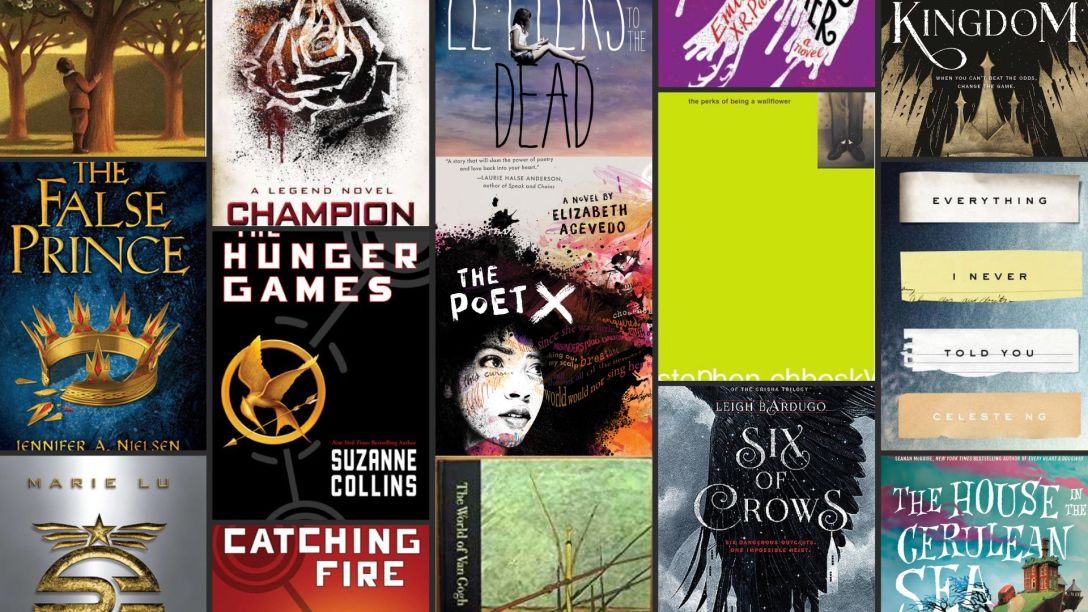
The library was always my most favorite place to go when I was younger, and I always looked forward to Thursdays when my mom would take my brothers and me for a new batch of books. When I discovered the Ascendance series–specifically The False Prince–something awoke in my little soul. I remember sprawling on my bedroom floor in front of my heater in the dead of winter, soaking this story and its characters into my very being. I laughed and loved and was kept up late into the night reading twists and turns and middle grade thrills. When I think of being young, my dumbstruck awe for this book and its third act twist will always reign prevalent.
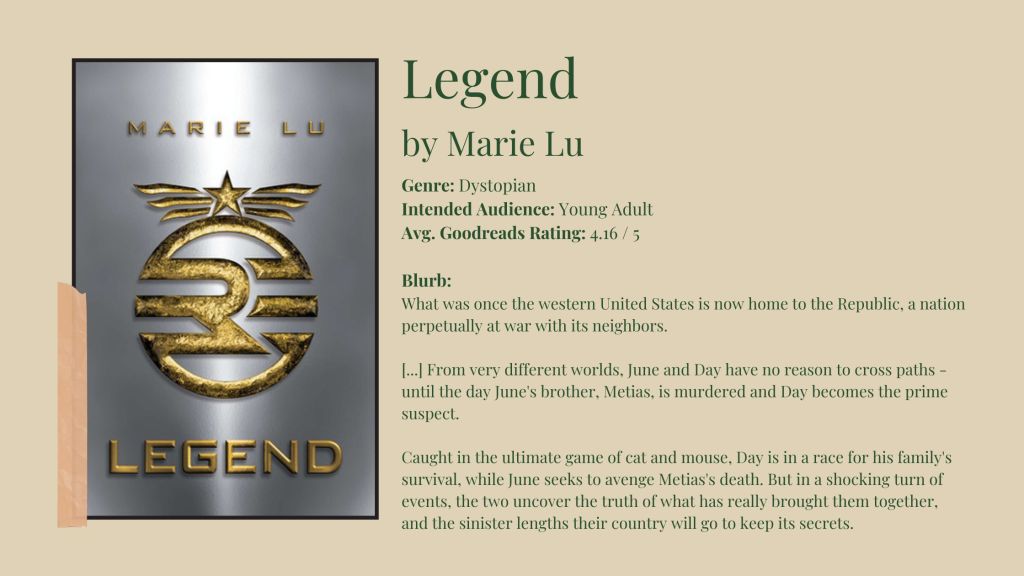
I can’t remember if Legend or The Hunger Games came first in the slightly belated dystopian-loving wave in my life, but whatever the case, Legend was definitely a huge part of this genre’s influence. The world, the characters, and the interrelation of it all were so vivid and visceral to me. From the contrasting class struggles to the cruelty of the nation’s government, there were facets of this story that evoked things in me that I didn’t have the verbiage to quantify. But, to be honest, I mostly loved Day and June together more than anything in the world.
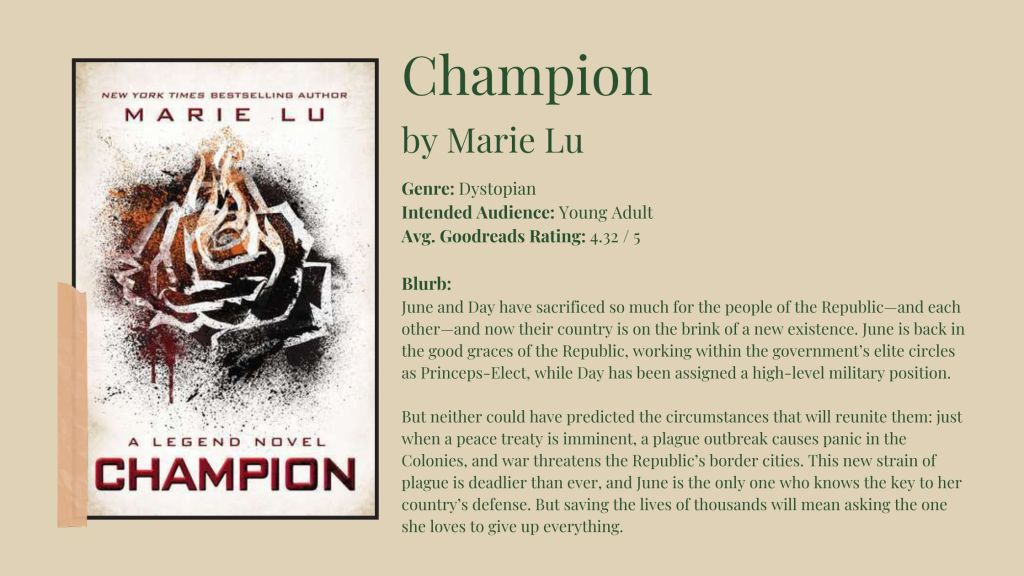
The third and initial final installment of Marie Lu’s Legend series pillaged my very being. What was it with this wave of YA fiction that sought out to emotionally cripple its readers? Whatever the case, I sort of miss it. To this day, whenever I think of the ending of this novel, my heart seizes a little. Gosh, talking about it now makes me want to relive the hurt of it all over again in some mildly masochistic way. There’s no tie like that of one’s relationship with the media consumed in developmental years.

I remember it taking very much convincing to finally get my parents to let me read The Hunger Games, and when I did, I tore through the pages like I had no other book. On the drive back home from the successful library trip, I pored over the words of this story, wholly sucked in for hours on end. By dinner, I’d made it to part two. In hardly any time at all, I’d absorbed every word, my whole world shifted. I’ve meant for years to give it a proper reread because I know there is so much if not the entire point of the story that I missed as a giddy tween. Truly a modern classic, it definitely deserves eyes more mature than that of one just looking for something to ship. (But, jeez, I’ve not known joy the way I had in those days.)
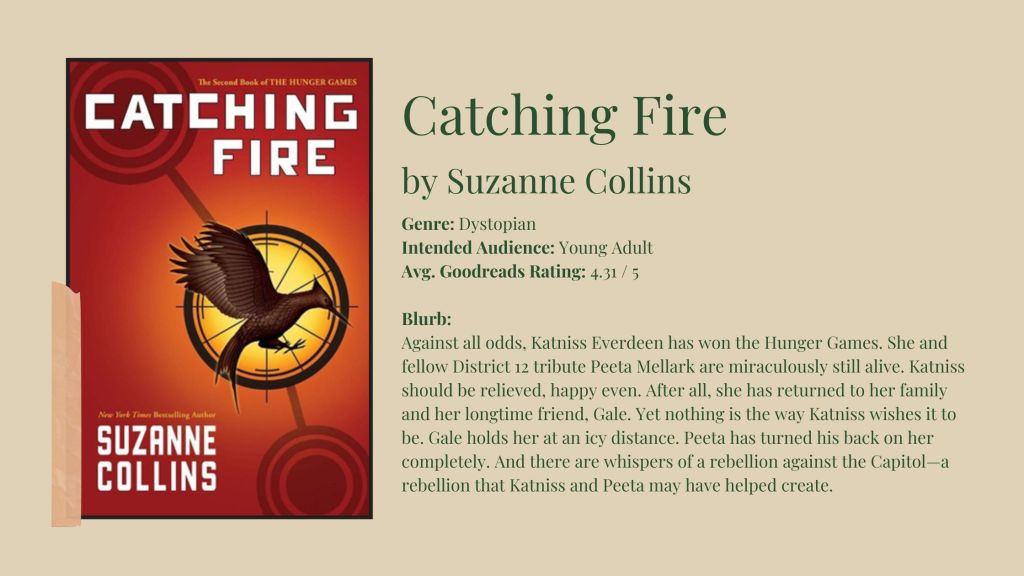
Catching Fire gobsmacked me in that it maintained the former’s quality when all other stories I’d consumed had a waning effect as the series wore on. The introduction of characters like Finnick and Johanna altered my brain chemistry, I think. Again, I think there’s so much nuance and insight I must’ve missed in Collin’s writing at the time, and I really do want to absorb the stories all again with a newer viewpoint.
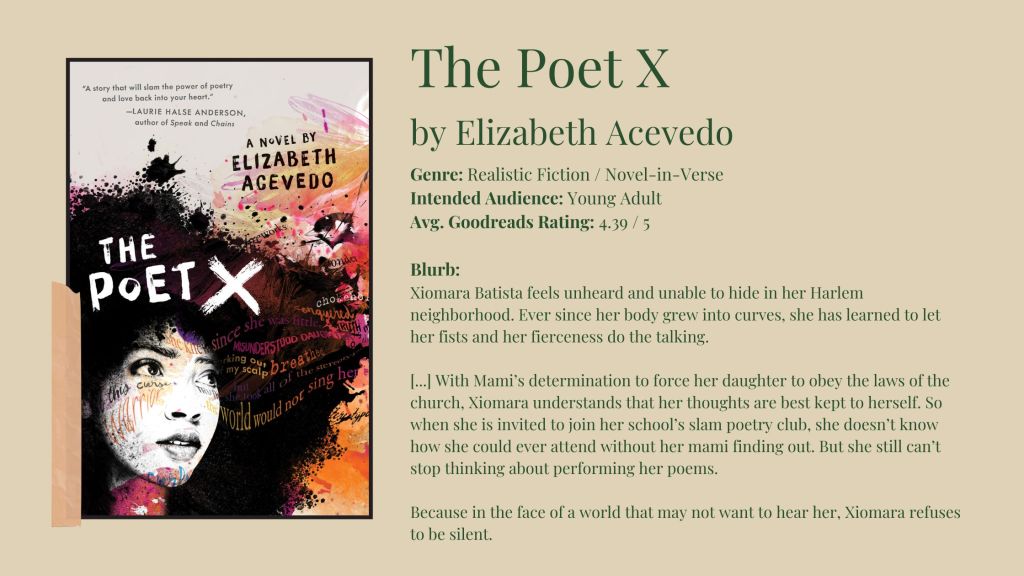
Reading The Poet X was a visceral experience. Rubbed raw by life, the struggles of the main character mirrored my own in so many ways at that time. These pages absolutely mirrored and amplified the trauma of adolescent development and the pains of navigating one’s relationship with themself and the others around them. Being a verse novel, the words went down easily and I tore through it, aching and enamored. It was an excellent read for where I was at during those early teen years.
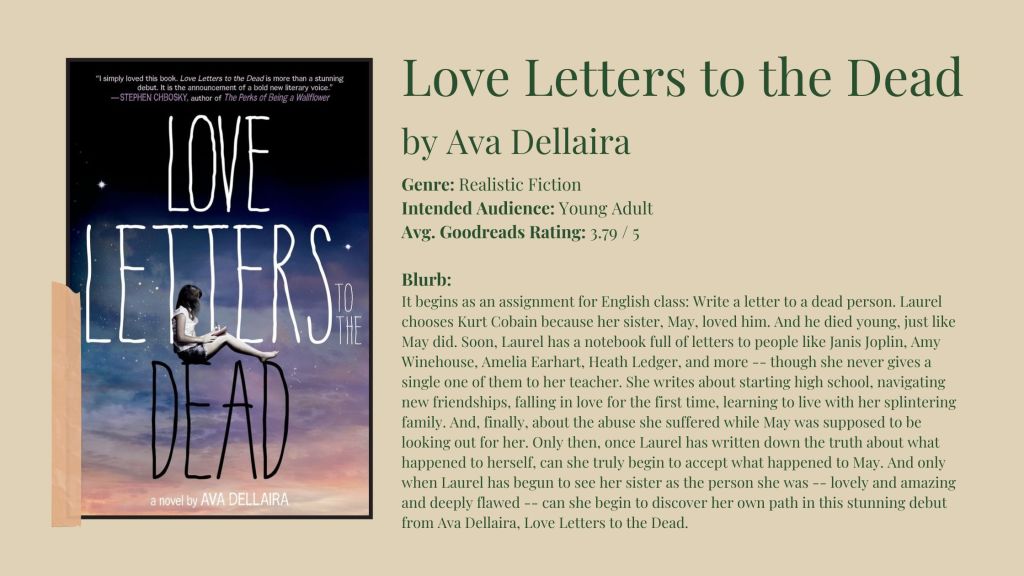
I actually DNFed Love Letters to the Dead before coming back to it a couple years later as a young teenager. I’m glad that I had waited those few years before finishing it, though, because when I did, it had a hand in shaping me more than any other piece of media I can think of. Stories consumed at volatile times in life will always leave an unquantifiable impression, and this book was definitely that for me. In retrospect and with more maturity, I know there are flaws to this story in terms of character passivity and lack of plot but in many ways those flaws are its strengths. It’s in those factors that I saw so much of myself. If ever prompted, I’ll always name this novel as my most favorite.
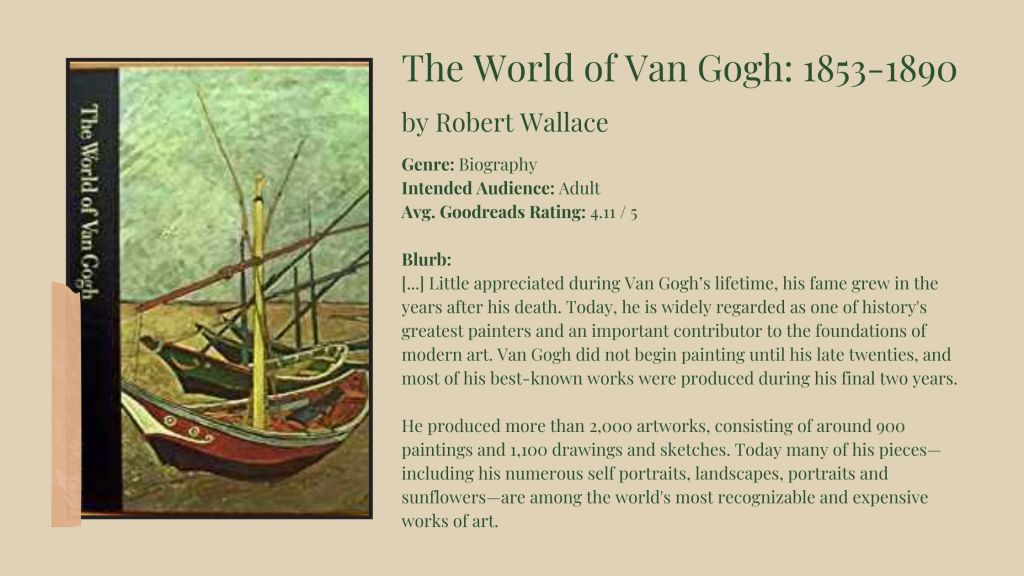
I’m not precisely sure what brought me to pick up The World of Van Gogh, but whatever the case, it played an unfathomably significant part in my life at that time. I’d had a rudimentary idea of Vincent van Gogh before picking this up as I feel many people have. This book brought that to a whole new level. After reading and relating to so many fictional stories about teenage girls like me, it was strange but consoling to feel so evoked and connected to the true tales of a man from a completely different timeframe. Van Gogh’s relationship with the world and his fumbling interactions with the people in his life held quite the mirror to my life. Romantic travails, familial anguishes, and the dynamic touched on between Van Gogh and Gauguin–though brief–are all evocative, tragic, and something I related to entirely. I cried during its final pages, and was shocked that it moved me so much. I hadn’t realized a nonfiction book could affect me like that.
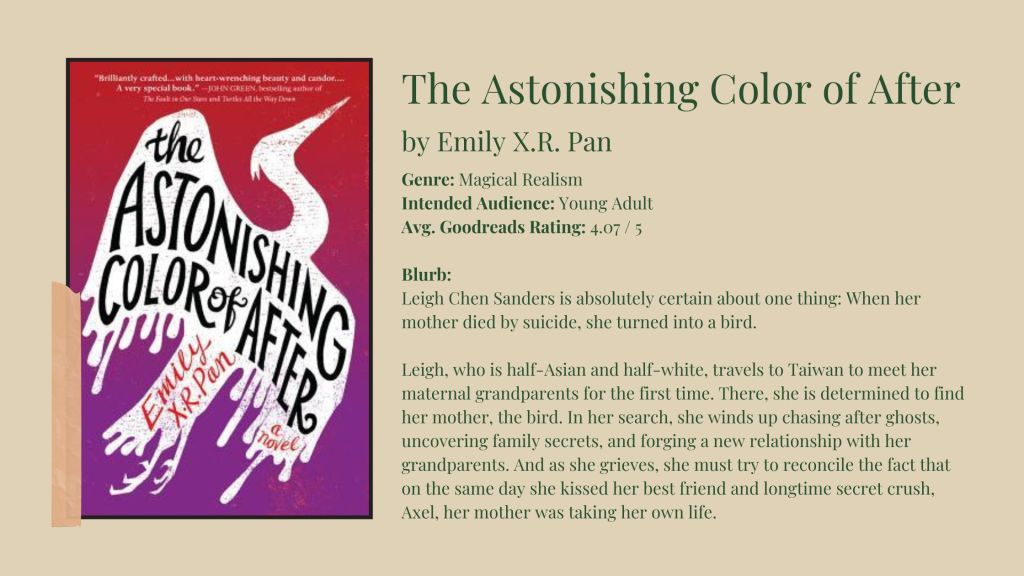
The Poet X, Love Letters to the Dead, and The World of Van Gogh were all consumed in a very concentrated timeframe at fourteen, and I read The Astonishing Color of After about a year later when all those old feelings were being drudged up again at fifteen. This spellbinding novel mesmerized me beyond anything else I’ve ever read. It’s prose and themes are rich, magical, and at once material and whimsical. An astonishingly beautiful book from what I recall. I remember being so moved my it that I put a pen to paper and sent off a letter to the author expressing how much the book had meant to me.

A week after The Astonishing Color of After floored me, I picked up The Perks of Being a Wallflower and had my world rocked. It crept up on me, the narration tangible, earnest, and naïve. Before I knew what had even happened, this book enraptured me, twisting my gut and wrenching my heart. I think it’s the last book in this string of stories that affected me to this degree. I finished reading this book during a car ride, and when I closed the worn library copy, all I could do was stare out the window at the passing trees and fields, entirely hollowed out. When the car stopped, and I stepped outside, the first whiffs of autumn hit me like a train wreck. I’ve never experienced a moment as poignant and debilitating as that.
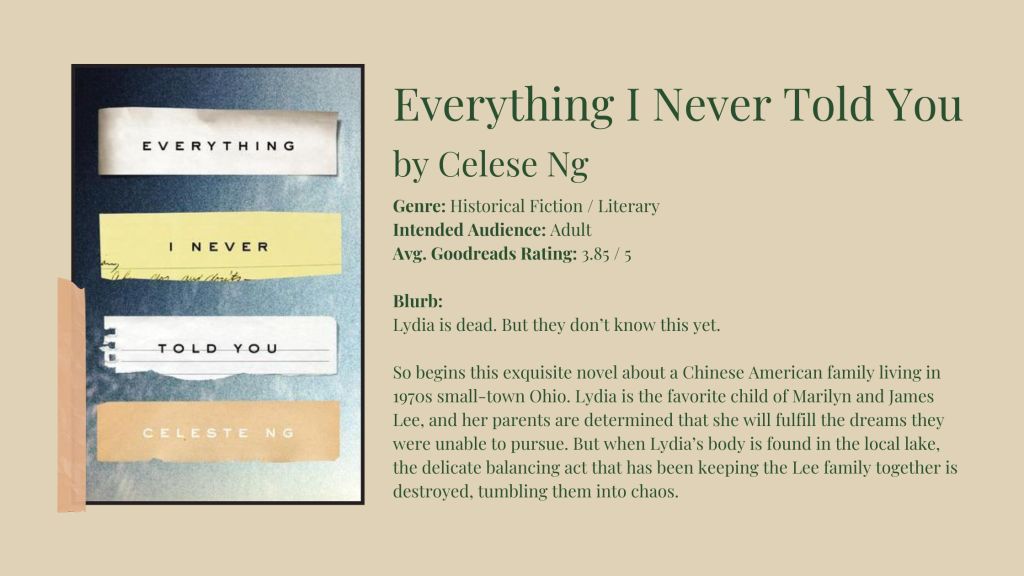
I picked up Everything I Never Told You in 2020 for an online book club, completely oblivious to the toll it would take on me (in a good way–a ruinous way, but a good one). I consumed it in just a sitting or two, caught in its orbit and unable to think of anything else but it until I’d finished it. And even then, I couldn’t shake it for days, stuck in a bout of the morbs, as they (the Victorian) say. Apparently for a book to earn a five star rating, it has to wreak irrevocable havoc on me. Yikes (respectfully).
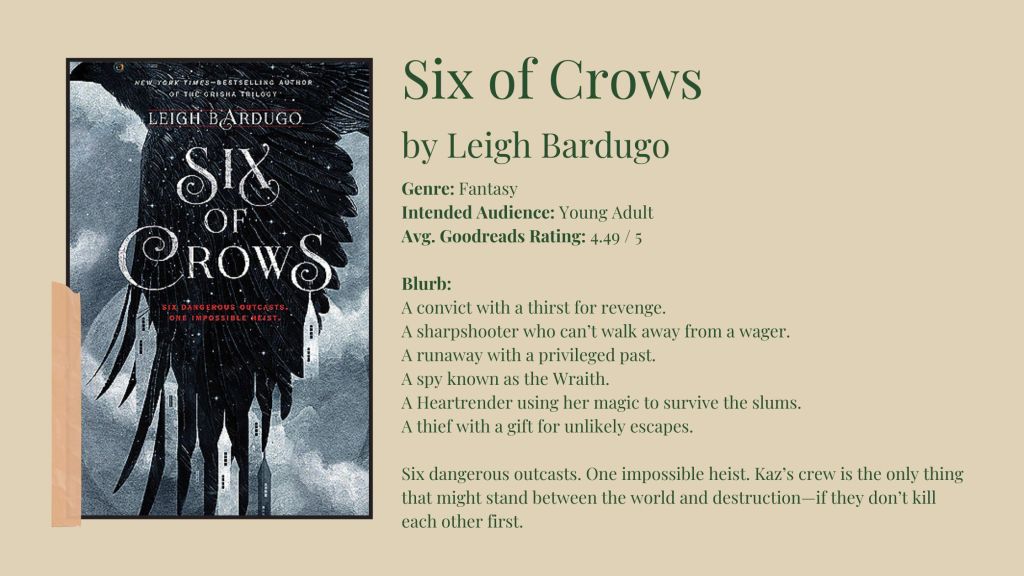
After a long string of five-star books that have only ripped my heart out of my chest, finally, finally, finally there’s a fun fantasy novel that I loved enough to give out a rating to break the sad-five-star-curse. That being said, though, there are still plenty of angsty things within Six of Crows that certainly aided in my love for this. Similar to Love Letters to the Dead, I actually soft DNFed this book years ago. I think I just had too many books I was reading and too much going on and it fell through the cracks. Regardless, I’m so glad I picked this up again after the Shadow and Bone Netflix series debuted. The beautiful marriage of all these distinct characters, the tangible, intricate worldbuilding, and high-stakes plot make this a phenomenal novel that reminds me why I want to write stories of my own.
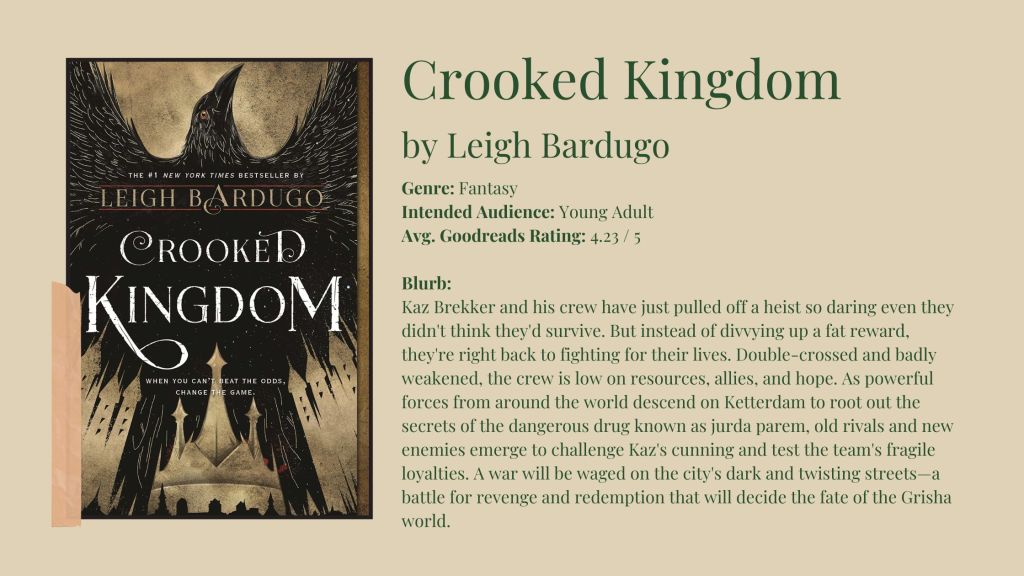
Picking up where Six of Crows left off, Crooked Kingdom is another incredible novel from Leigh Bardugo. Everything to love about its predecessor carries through to the next, and there’s even more to love with it (Wylan POVs, for one). When I’d read Six of Crows, it had been a library copy. After finishing it and loving it, I immediately bought copies of the duology, allowing me the chance to mercilessly tab Crooked Kingdom. Every time I see all the gazillion tabs sticking out of my copy, I’m almost a little embarrassed but that just shows how much I loved it.
In 2022, I read fifty books making it my biggest reading year since I was a voracious twelve-year-old bookworm. Of all the books I’d read that year, there are a few that are definitely favorites. I read and loved Maggie Stiefvater’s The Raven Cycle books and Call Down the Hawk, Silvia Moreno-Garcia’s Mexican Gothic, and Alice Oseman’s Solitaire. I even rated The House in the Cerulean Sea by TJ Klune five stars to begin with before ultimately dropping it to 4.5.
When I was younger, I gave five stars out fairly easily. Fives were books I loved, fours I liked, threes I didn’t, and I’d never dream of rating anything lower. As I got older, I ended up reserving five stars for the books that changed the way I think and felt (ie. The Poet X, Love Letters to the Dead, The Astonishing Color of After, The Perks of Being a Wallflower, etc.). Going into 2022 when I started this blog, I wanted to be more critical and spend time analyzing what I read. I made a conscious decision to not hold back my thoughts or feelings. However, in doing that, I think I lost a little bit of the magic of reading.
Presently, I’m trying to determine how I want to consume, process, and discuss books (and movies, television, and music) going forward. This year I read the Percy Jackson & the Olympians books for the first time, which I think has been very beneficial for me. I think I really needed to be reminded what made me love reading so much as a kid. It wasn’t because I wanted to critique and dissect to the point of ruining a story for myself. It was the magic of a world and characters to get lost in, to love, to feel for, to see yourself looking back from.
Don’t get me wrong, I still love a good analysis. I think I’ll always love looking at books and figuring out what makes them tick, and all the things they’re communicating under the surface. The flow of the market and how art influences itself will always intrigue me. But to disregard the childlike joy of loving something without shame matters even more, I’m beginning to think.
So, with that being said, I’m hoping I will allow myself to find more five-star reads going forward. I don’t want to get in my own way when enjoying art anymore. Because I think that’s the real reason I haven’t found a new five-star read in years. Not because no book has been good enough but maybe because I haven’t been good enough to any book.
Have you read any of the books on this list? Did you enjoy them? Why, or why not? What are some of your favorite books? Do you have a particular philosophy for how you rate things? I’d love to hear your thoughts below!
- Winter ’26 Reading & Writing Wrap-Up
- My 2025 Year in Books Ranked
- Top 10 Books on My Winter ’25-’26 TBR | TTT
- Fall ’25 Life Updates: Moving, Nanowrimo, & Hardly Reading
- Annual Library Book Sale Haul: 2025 Edition
[DISCLAIMER: Several photos in this post are paired with Amazon affiliate links, meaning I’d earn a small commission from qualifying purchases. Thank you for your support!]

 Little Bit of All That
[…] similarity to it, I’m assuming I shelved this book in hopes of finding something similar to one of my favorite books, Love Letters to the Dead by Ava Dellaira. That being said, while this novel is well-rated, young adult romance isn’t something that […]
LikeLike
[…] I added Home is Not a Country as it was most likely compared to Elizabeth Acevedo’s work (The Poet X was a five-star read for me when I picked it up years ago). Because of that and because the blurb still piques my interest, […]
LikeLike