Hello, everyone! So far, 2024 hasn’t been much of a year of reading for me but that’s not to say I haven’t been consuming media and analyzing it, at least to some degree. I rewatched Heathers (1988, dir. Michael Lehmann) the other day after not feeling like I “got it” the first time around, and I’m so glad that I did! Something that really stood out to me on a rewatch was the way color is utilized throughout the film, and I really wanted a place to ramble about what I noticed (and probably look far too much into possibly inconsequential details…). Definite spoilers in this post so please only read if you’ve seen the film! 🙂
Introducing the Heathers
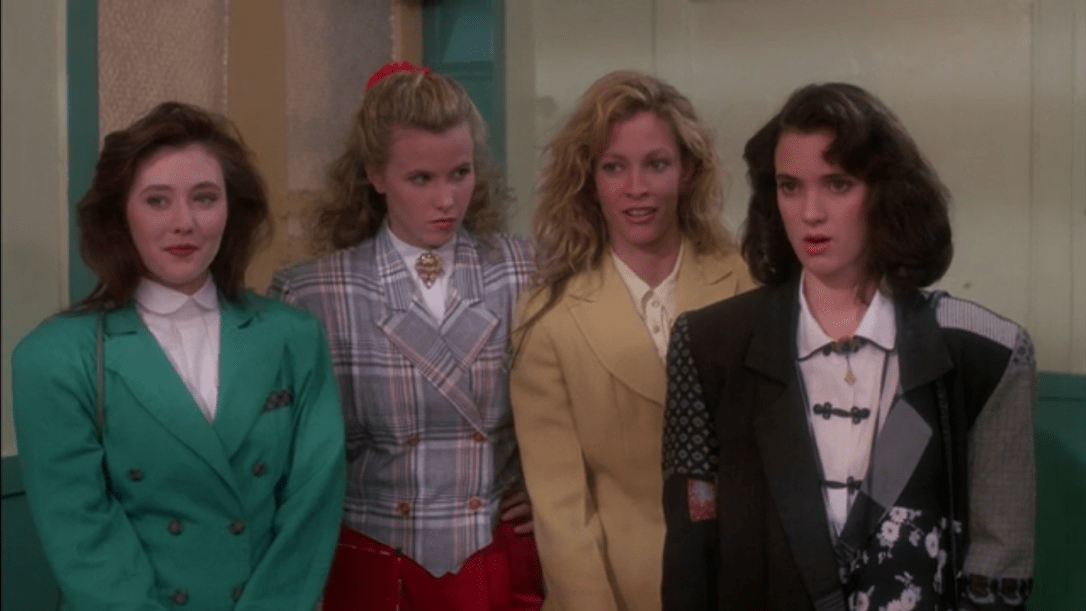
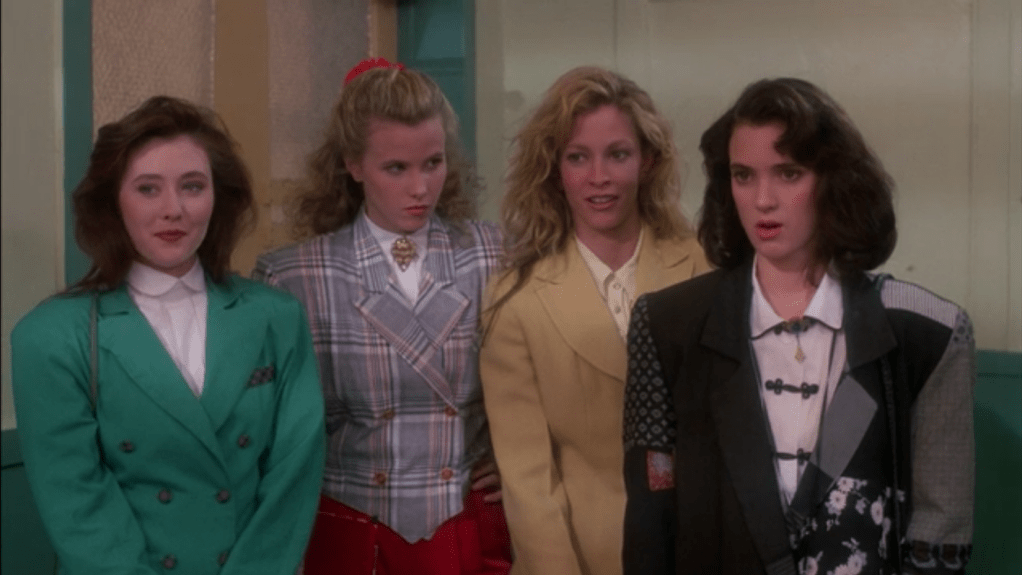
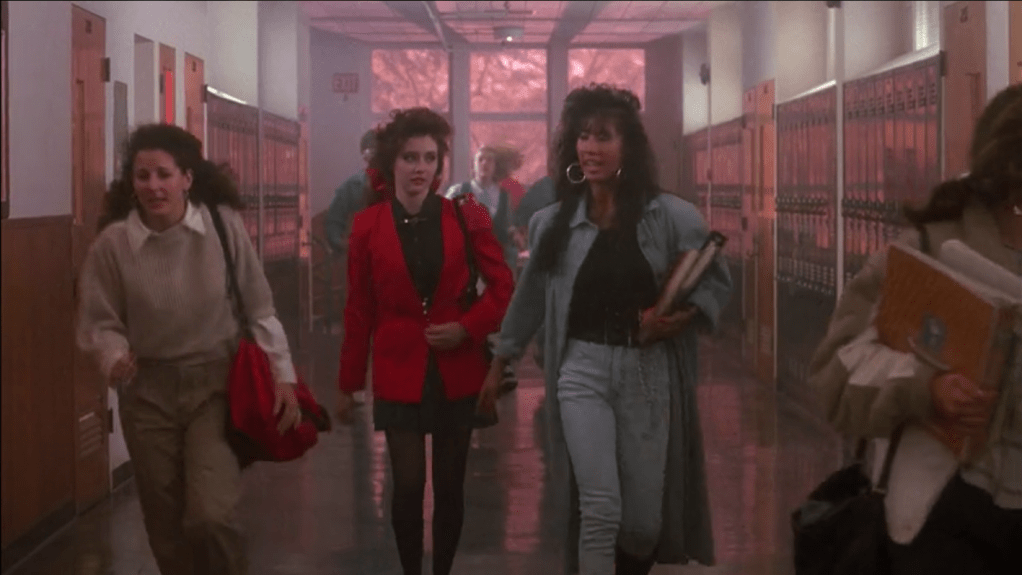
The most basic and most prominent instances of color as a communication of theme I noticed are in each of the Heathers’ signature color.

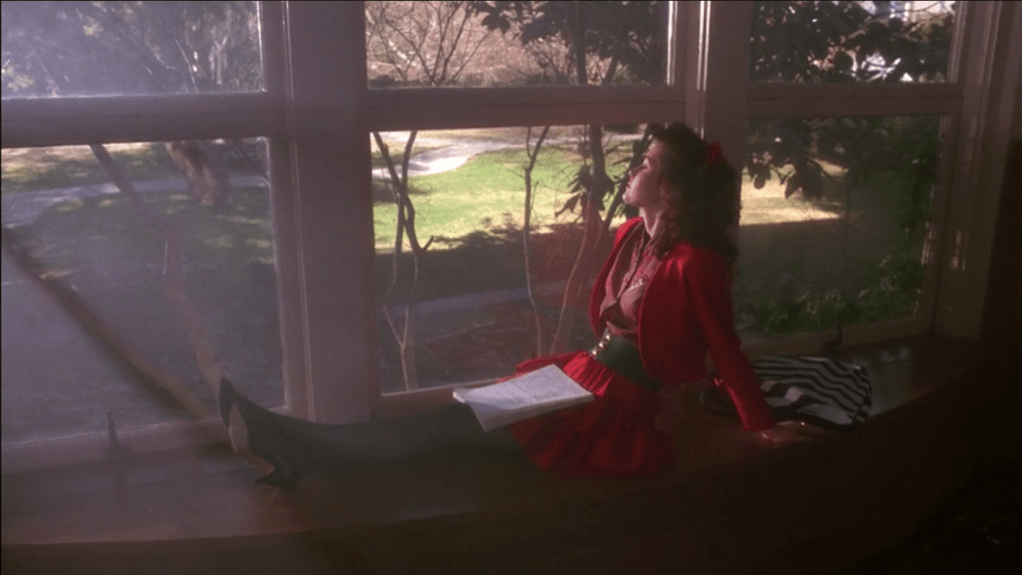
Firstly, we have the queen bee, Heather Chandler, in red. Red can be paralleled to a whole host of things from blood to cartoon hearts to even traffic signs/warning messages. It can represent love, lust, and the spectrum between it. It’s often associated with passion, assertiveness, and danger. For Heather Chandler, it calls attention to her, notifying the viewer that she’s the clique’s leader and someone to be well aware of. There’s nothing subtle about her.
Following Heather Chandler is envy-green Heather Duke. She immediately comes off as second-in-command, always tucked in beside Heather Chandler, wearing the second boldest color on the scene. As the film goes on, we see more and more how much she desires Heather Chandler’s role at the top of the food chain. When she gets the chance to take it, she does. In the beginning, though, she’s kept in her place on the sidelines.
Heather McNamara is the most reserved of the three titular “Heathers”. Yellow is an interesting color, especially in terms of her character, because it’s most often associated with joy, idealism, and typically a near childlike wonder. However, in Heather McNamara it presents as her timidity and tendency towards caution. Of the three, she generally dresses in lighter shades of her color, less stark against the other Heathers. In this, though, she’s still unmistakably one of them.
Introducing Veronica
In the opening scene, before we even see Veronica in formal attire, we see her head poking out of the ground in an assumed daydream sequence as she’s writing in her diary. While the other girls are looking sharp, refined, and perfect, Veronica is literally just a piece in their game. This odd opening sets the scene splendidly to this offbeat film, establishing the tone and a prominent theme.

When we’re brought back to reality, we see Veronica’s attire differs from the other girls in her black and gray, establishing her as “other” from the beginning. However, her blue tights accent her outfit, clarifying that she is indeed one of the Heathers, if perhaps in an unspoken lower caste.
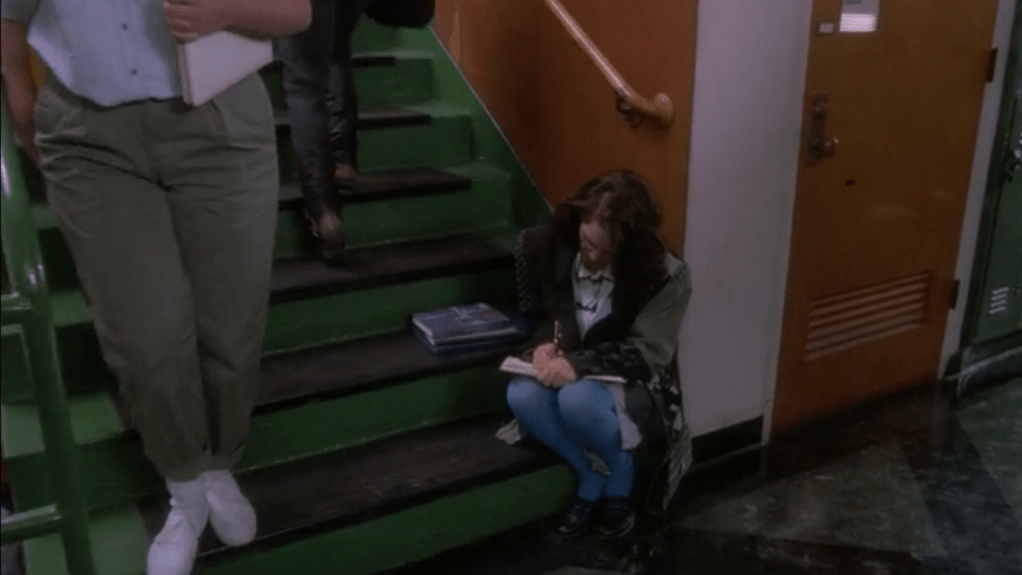
We only really notice the detail of her blue tights when she’s beckoned to join the Heathers in the cafeteria, pulling herself away from her diary. Upon this transition, the shots focus more on the top half of the girls, in turn blocking out the small detail signaling that Veronica is also a Heather. That being said, the sharper silhouettes hint at her position.
Introducing JD
When we first see JD, he’s in his own signature black, clarifying that he’s a bit of a loner and a rebel. Like Veronica, he’s separate from the colorful people circling around them. Throughout the film, we see minimal shifts in the accents of his outfits but for the most part, he’s clothed in blacks and greys.

Color as a Storytelling Medium
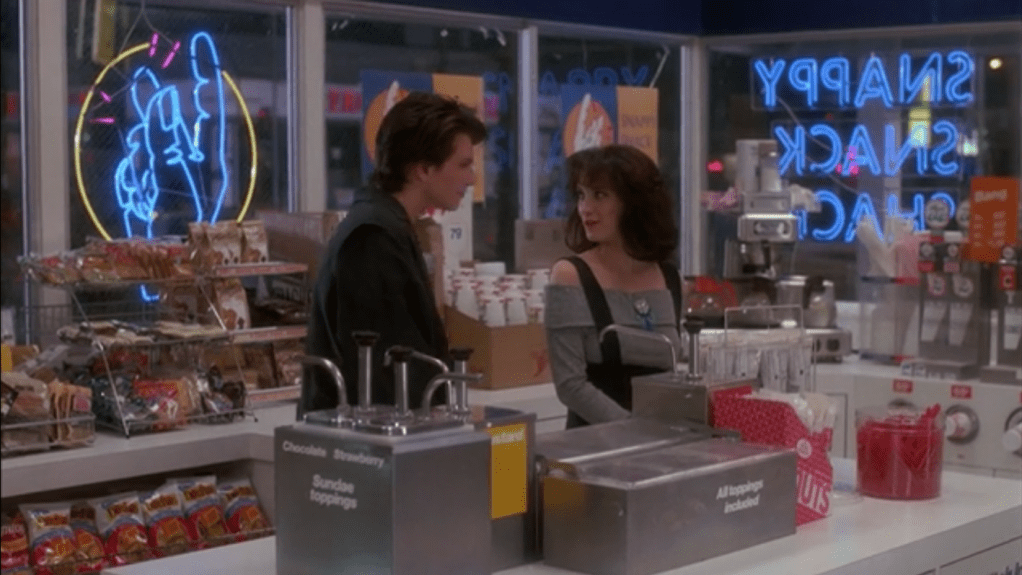
After school later that night, Heather Chandler takes Veronica with her to go to a party. On the way, they stop off at a convenience store and we see that though Veronica has changed her clothes, she’s still in the grey and black with the blue tights subtly tying her in. When she runs into JD inside, the two of them look homogenous in the same color pallete.

Later at the party, the guys that Heather and Veronica pair up with match and contrast the duo. I’m not sure this has much thematic relevance (although I’ve seen discussions on the thematic weight of the lighting throughout these scenes) but it’s a striking visual.

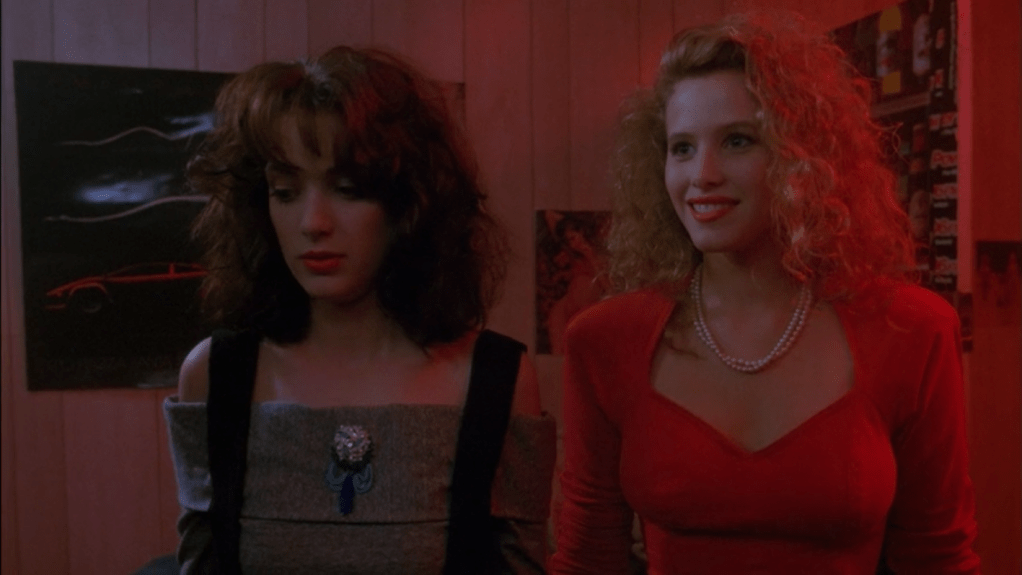
After the farce of a party, Veronica goes home and we see her unwind into what becomes more apparently her signature color: blue. Blue often represents logic, stability, sometimes passivity, sometimes coolness and collection. When we see Veronica in this blue piece, it’s much more relaxed in silhouette than the Heathers’ typical attire.


It’s this next part of the movie when the colors really started standing out to me. The following day, Veronica and JD go to Heather Chandler’s house to get back at her after she threatened to ostracize Veronica at the Remington party. Veronica intends to play a little bit of a prank but JD has something more extreme in mind.
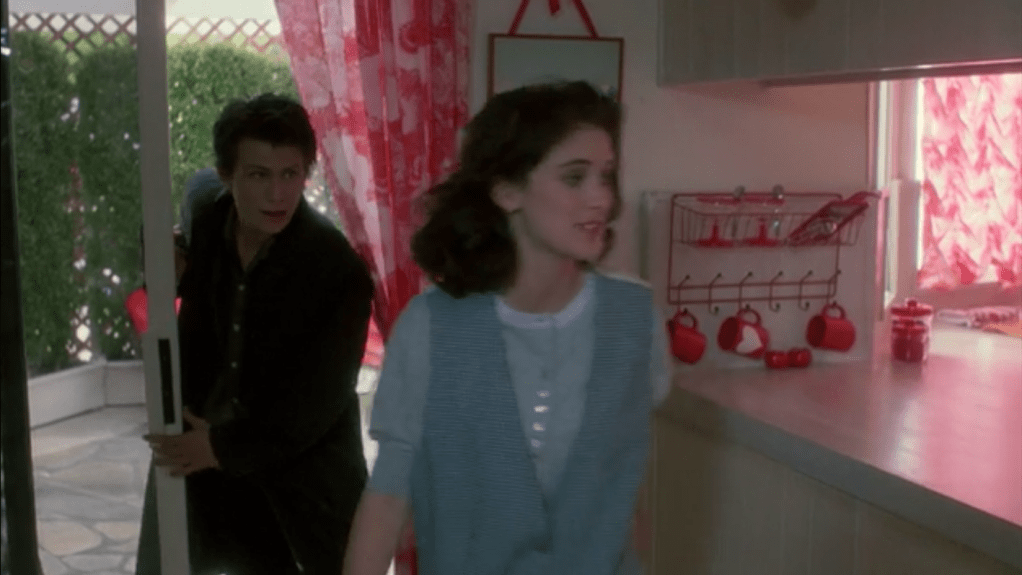
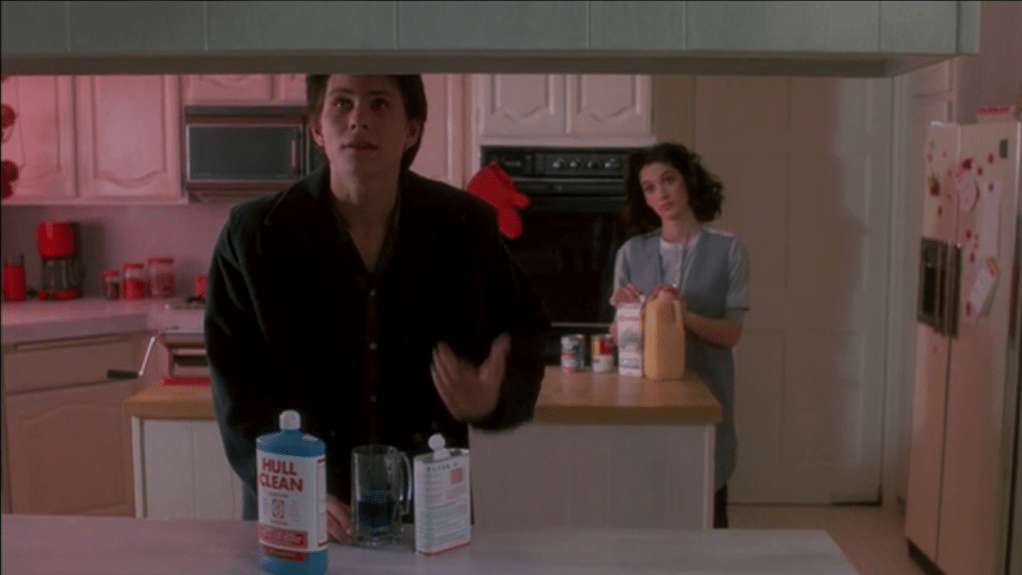
In terms of outfits, we see Veronica in her lightest colors yet. Her blues look gray, perhaps to contrast the black of JD’s clothing. It’s already been established that Veronica and JD are both “other”. Now we see how the two of them contrast. As the scene plays out, we see the light and dark of their outfits mirror the push and pull of Veronica’s hesitance and JD’s resolution.
And then in terms of setting, it’s easy to tell that this is Heather Chandler’s kitchen because of all of the red accents throughout the kitchen from the mugs, to the magnets, to the text on the deadly bottle of cleaner. The deadly bottle of blue cleaner.
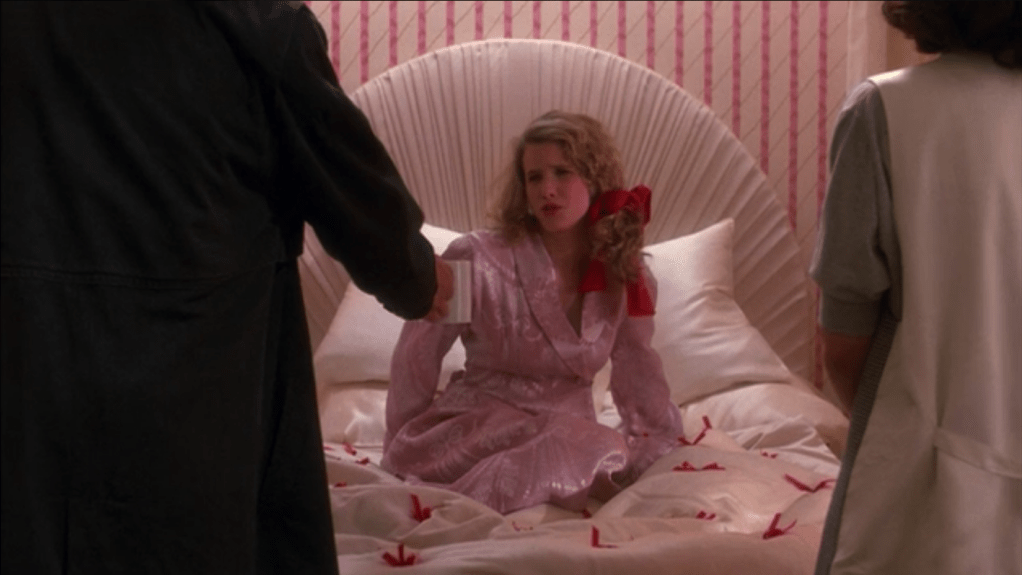
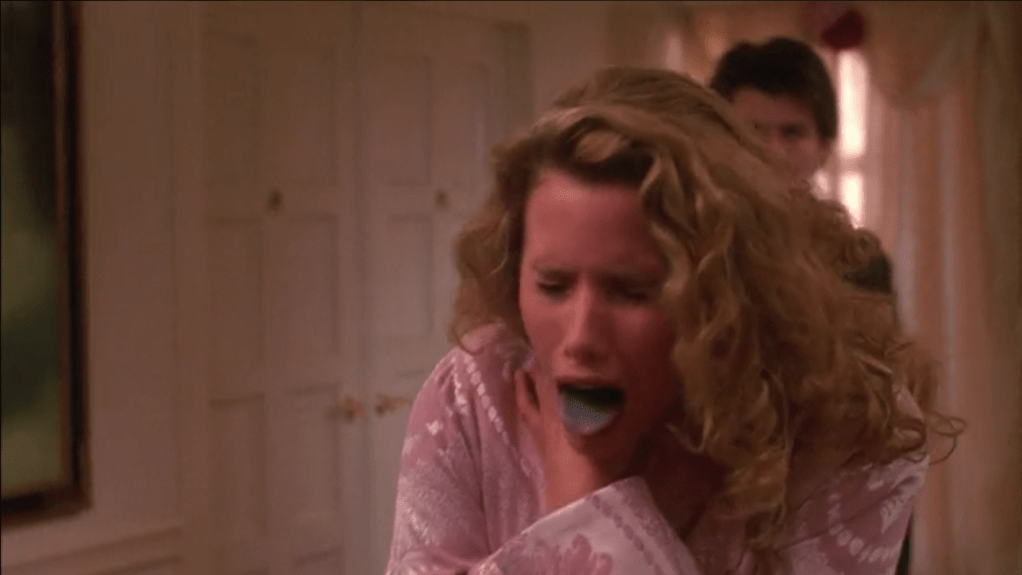
When JD and Veronica–who stand out significantly in her pink and red room–offer Heather Chandler the mug, she takes it and drinks, her mouth left Veronica’s signature color as she dies.
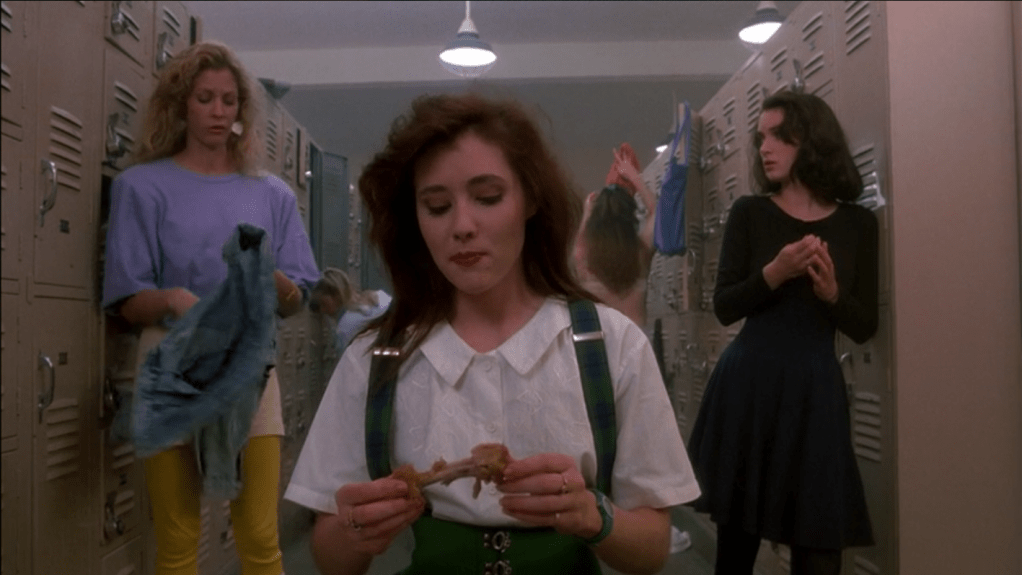
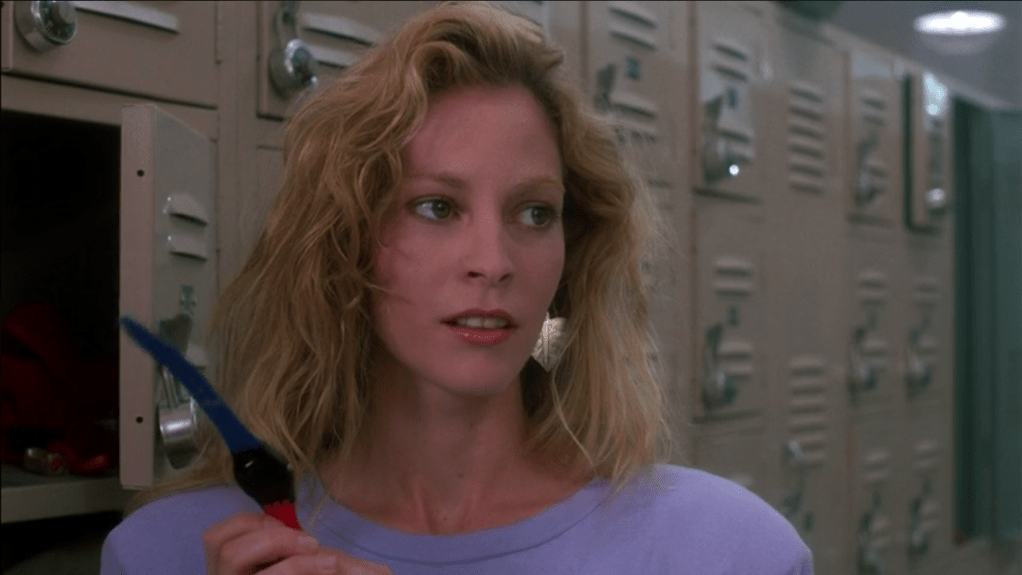
After Heather Chandler’s death, we see the remaining Heathers in the locker room with Heather Duke front and center, perhaps hinting at her soon inheriting the role of top Heather. Her green is bolder than Heather McNamara’s yellow–which is seen only in lesser facets of her outfit–and Veronica’s blue skirt that’s so dark it looks black.
Then, on another note, Heather McNamara finds Heather Chandler’s watch and hands it off to Veronica. In its colors, it’s an intersection of both Heather Chandler’s red and Veronica’s blue.


Interestingly, it’s only at Heather Chandler’s funeral that Veronica really begins to look like one of the Heathers. Her signature color is the boldest it’s been, and she wears the sharper, sleeker lines of the clique. Heather McNamara is much humbler, only boasting a few yellow accessories.
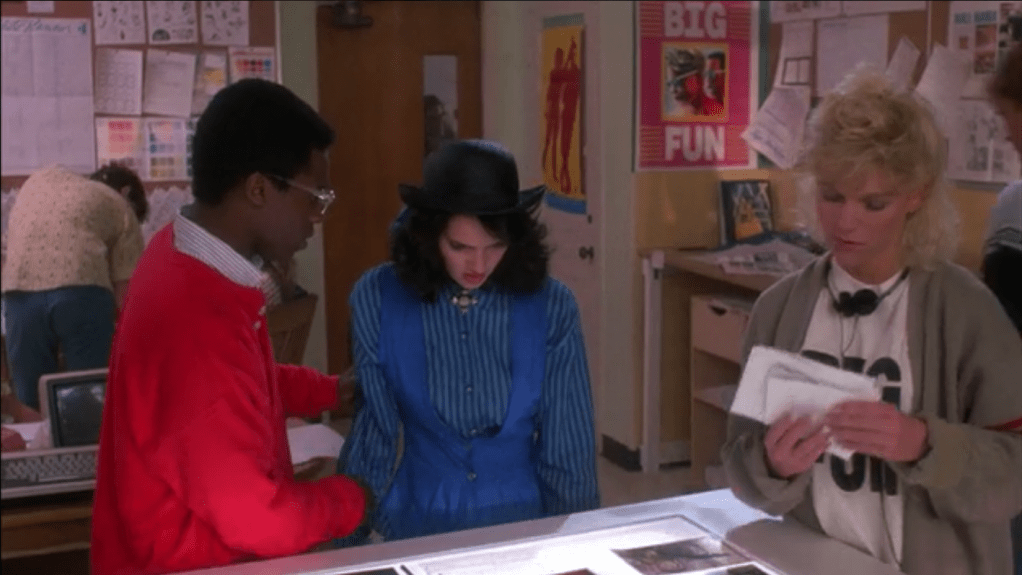

Veronica’s more assertive outfits continue into the next day. Additionally, JD begins to take on her color a bit, likening himself to her, reminding the viewer that they are the same kind of other, that this is to be remembered. However, this is only most important to know when they’re together alone.
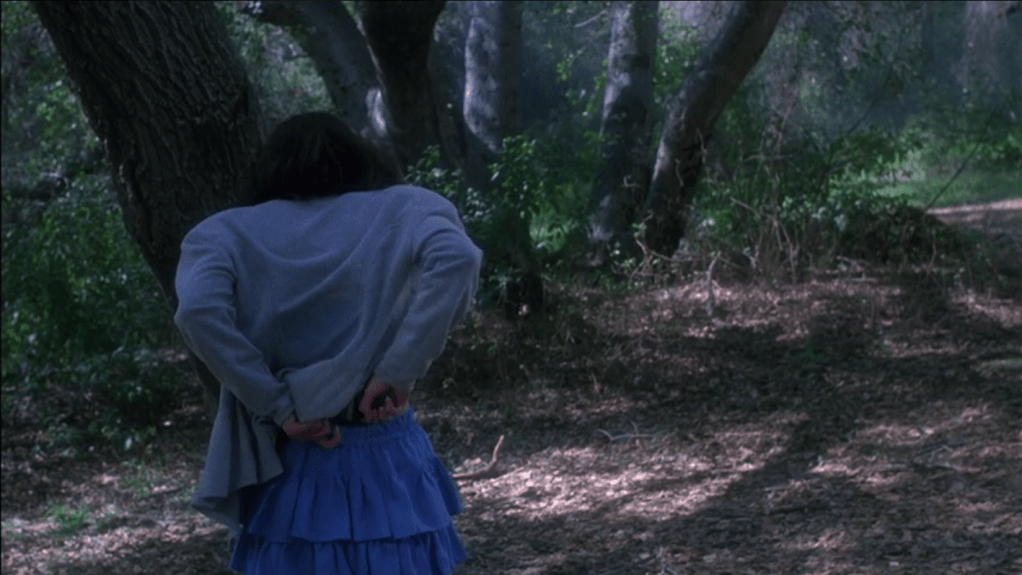

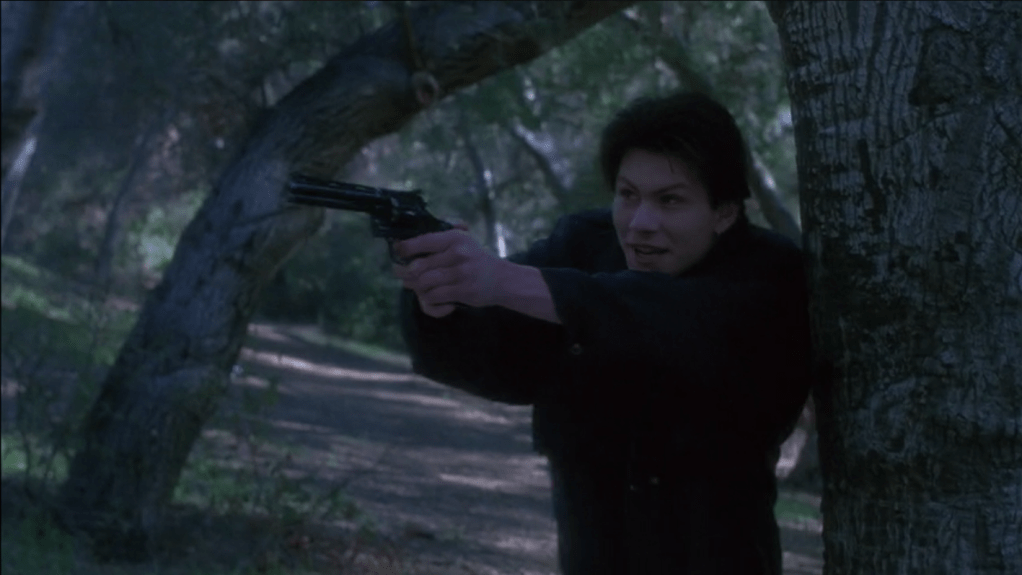
When they execute their next murder, we see Veronica dressed in an amalgamation of several points established throughout. She has the sharper blue reminding us she’s more of a Heather with Heather Chandler out of the way, and she has the stark blackness that aligns her with JD. But–as she’s still under the impression that they’re only playing a prank–she has the lighter cardigan, both softening her edges and, again, contrasting her as purer than JD.
After this midpoint, when Veronica’s in deeper waters than she was before, we see some shifts in the way the Heathers present themselves.
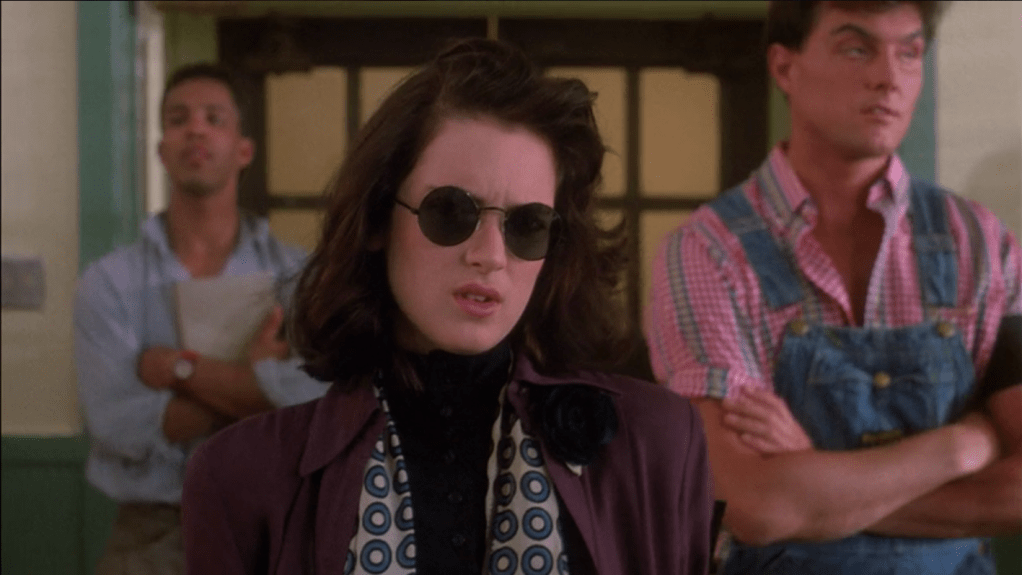
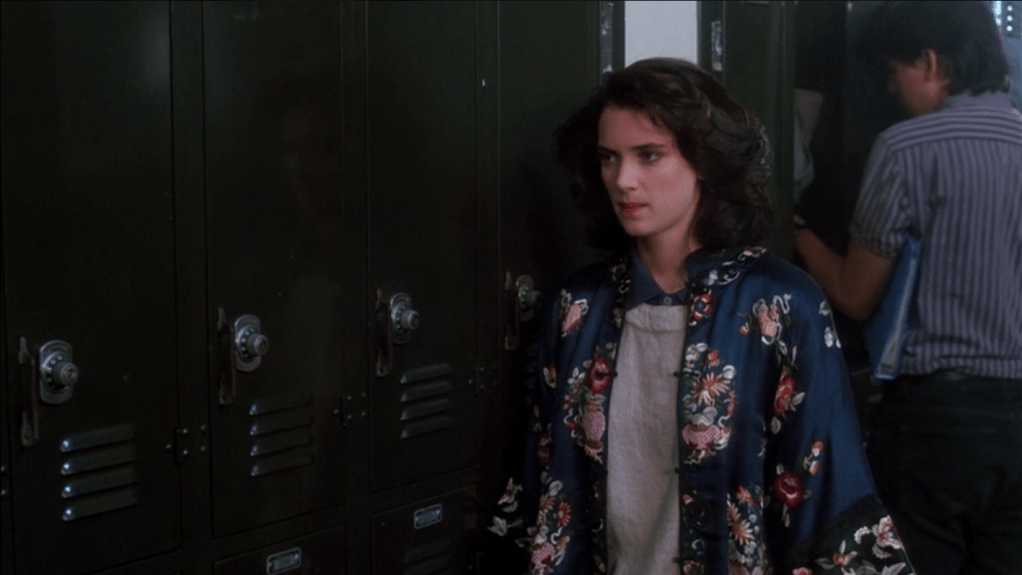
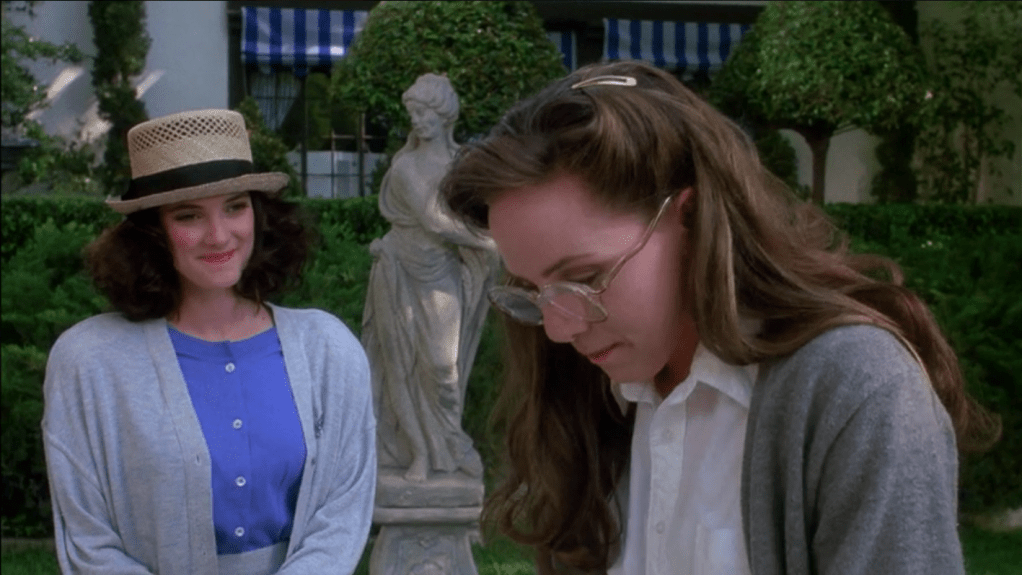
After the double-homicide, Veronica wears purple for the first time in the movie, depicting her world’s shift as now even more people have died because of her and JD. She’s losing control of herself and where she stands. Then we see her next in her robe as she goes to Heather Chandler’s locker, remorse kicking back in. And, finally, upon going through all of these things, she reaches out to her old friend Betty Finn and is dressed similarly to how she was in both death scenes, representing the–ironically–purer version of her.


Meanwhile, Heather McNamara begins losing herself as a “Heather” without Heather Chandler to anchor her. This is reflected in the yellow shrinking out of her outfits. Meanwhile, Heather Duke’s green is vibrant up until JD offers her Heather Chandler’s red scrunchie. Upon donning it, Heather Duke becomes the lead Heather, and Heather McNamara finds her color again as she becomes the secondary character to someone else.
However, though Heather McNamara starts wearing her yellow again, she looks more awkward than before, and she seems ill-at-ease. This point is driven home more when she attempts an overdose. It’s interesting to note that one of the only yellow things in this scene are the pills themselves.
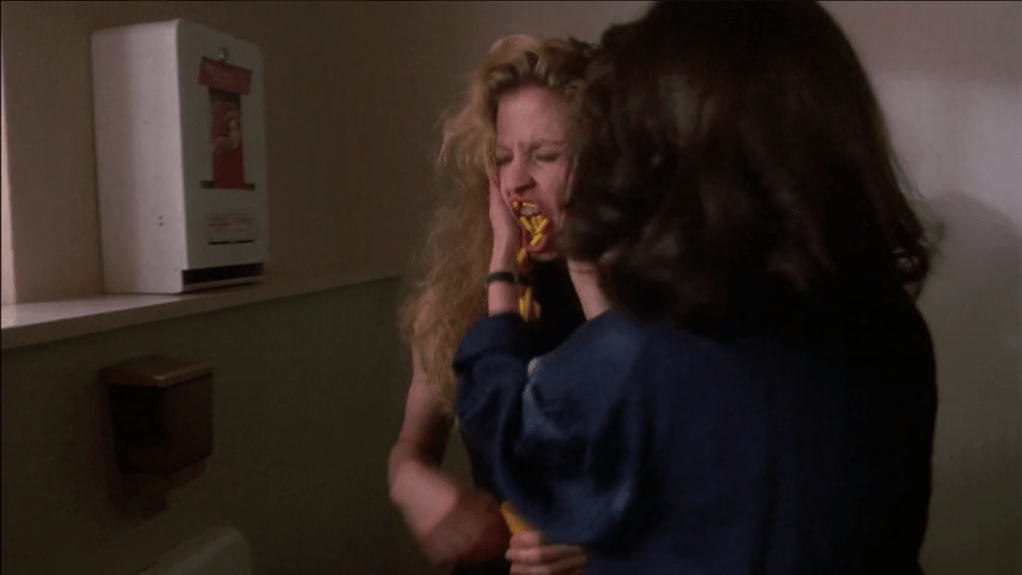
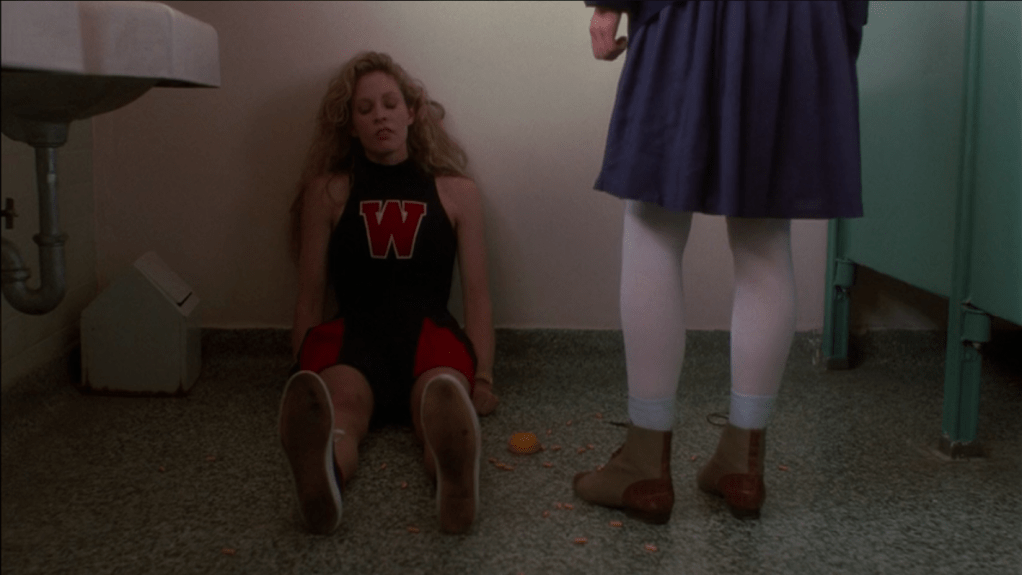
Meanwhile, Heather Duke basks in her role as not only the top Heather but as very nearly the last remaining one as the clique chips away little by little. Veronica confronts her–opposites in their red and blue–but ultimately lets it go as she has bigger things on her plate with JD’s homicidal goals becoming even grander.

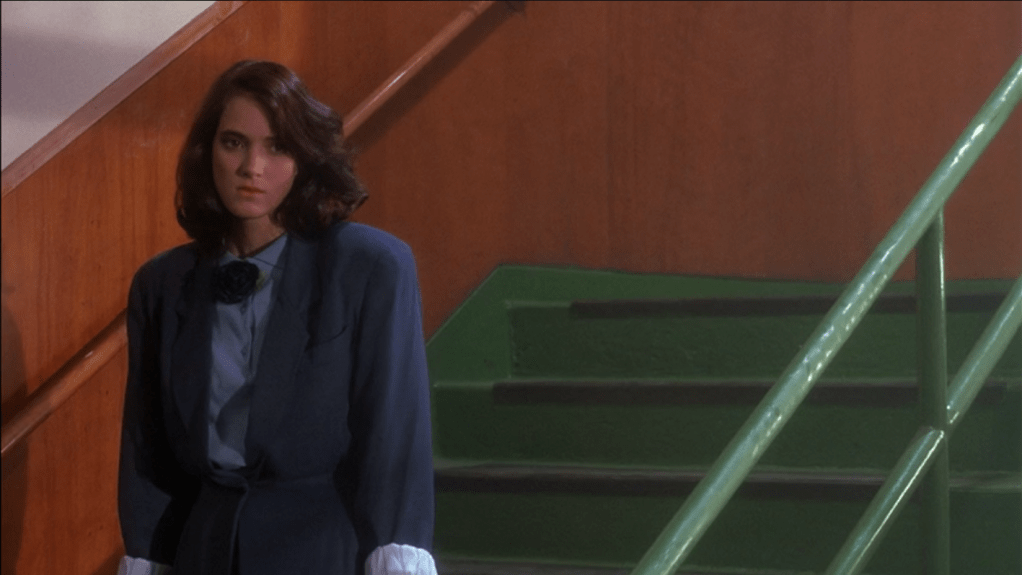
As we reach the film’s finale, Veronica once again wears a softer-framed, lighter cardigan–something that has become as signature to her as the color blue has overall. Throughout the movie, JD had been seen with dark green and dark blue shirts under his black jacket but now it’s only black-and-white as he seeks to carry out his biggest plan yet.
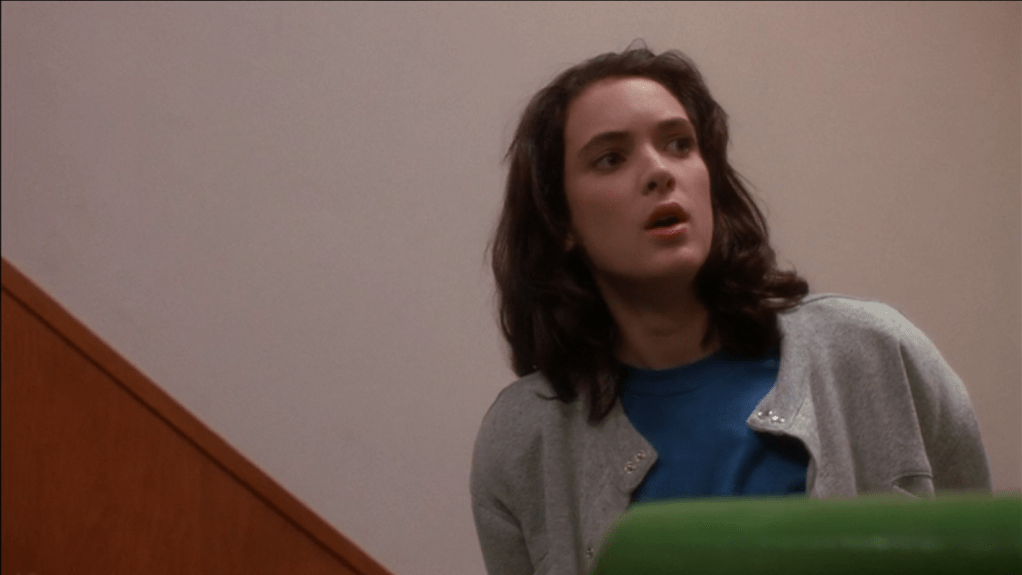

After the bomb meant to blow up the school has been deactivated (an interesting moment because I don’t know that it’s necessarily clarified whether JD does this accidentally or on purpose), and JD takes it outside to detonate and kill himself, Veronica submits to the scene, soot marring her and her clothes for the first time in the movie.
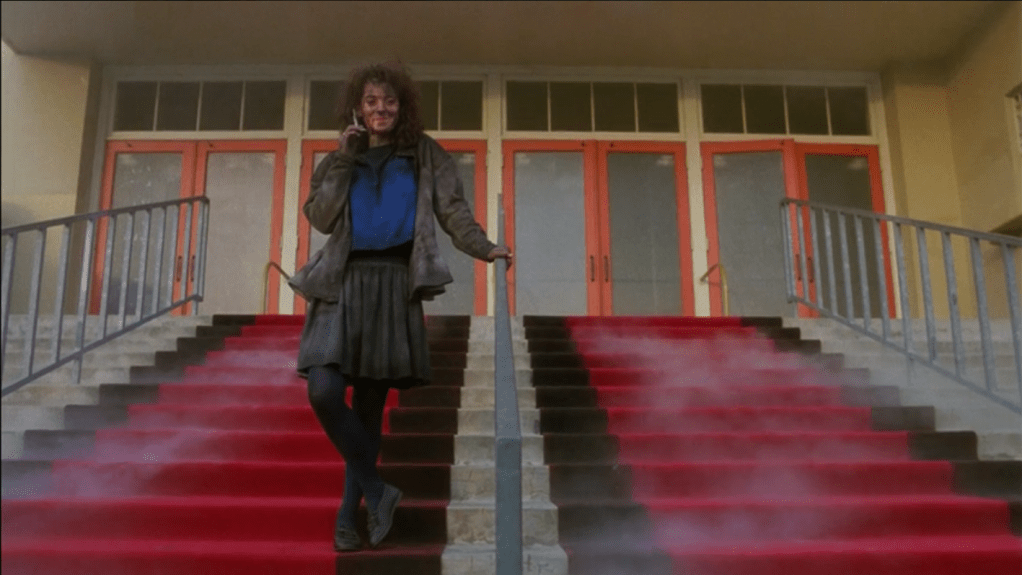
Finally, when she goes back into the school, she encounters Heather Duke, takes Heather Chandler’s scrunchie out of her hair, and dons it herself. In this, she finally breaks the cycle of the Heathers and disbands the clique altogether. With the red scrunchie in her hair, covered in soot and dust, the prim and proper cruelty of the Heathers is no more–she’s taken the power out of the group. Heather Duke looks perfect in her getup, outside of the sooty kiss left on her cheek by Veronica, illustrating this.
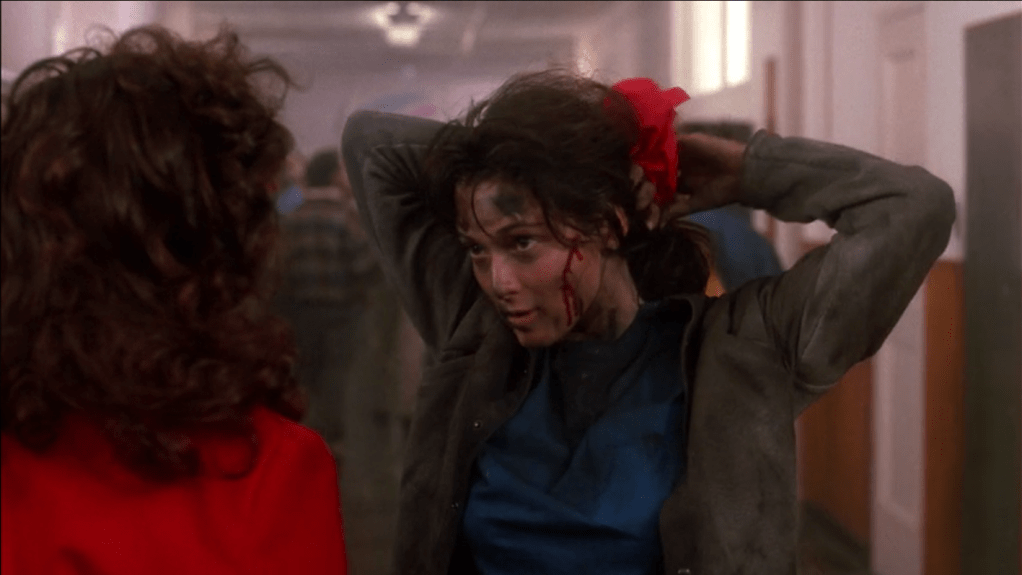

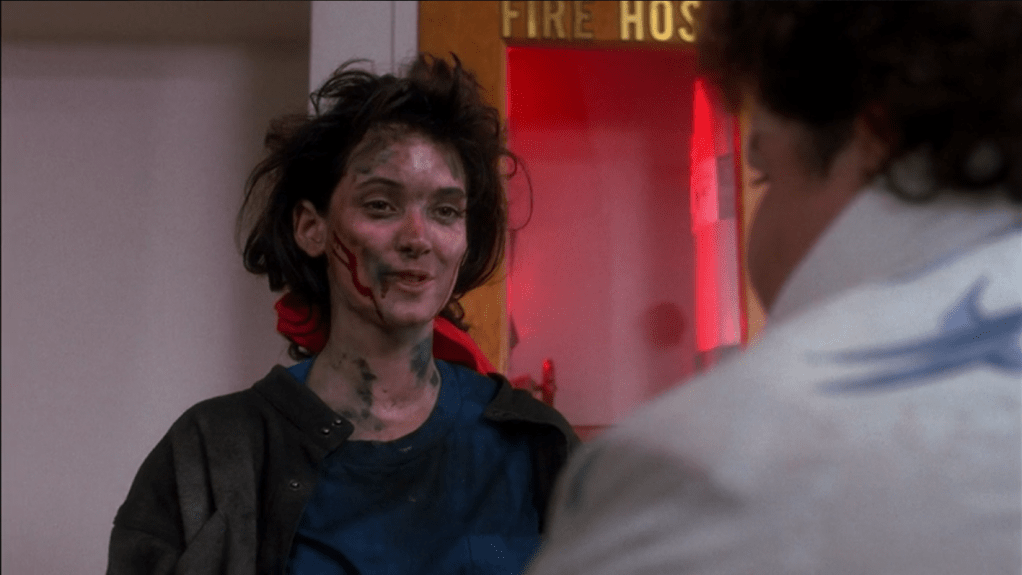
In the end, Veronica sheds her previous desire for popularity and then for vengeance, and instead seeks out friendship with Martha Dunnstock, someone she’d played a part in bullying at the start of the movie. This full circle moment shows that the Heathers and JD never did anything to help Veronica, and it’s now her responsibility to right the wrongs she still has control over. She wears Heather Chandler’s red scrunchie and the black soot of JD’s explosion to spite them, to spite all that they made her and so many others endure. Now she wears blue not because she’s one of the Heathers but because she’s Veronica. Finally, she is free from the Heathers’ game.
I’m sure there’s plenty more room for analysis in terms of the costume design, the lighting, the settings, the characterization, and more but these were some of the things that stood out most to me! Of course, a lot of this is my own personal opinion and, in turn, subjective. If you have your own ideas, let me know!
Have you seen Heathers? If so, what did you think? Do you have any favorite movies that play with themes via costume design, setting, colors, etc.? Are there insights I missed? Do you disagree with any of my assertions? I’d love to hear your thoughts below!

 Little Bit of All That
[…] Heathers (1988), dir. Michael Lehmann [available on Tubi] […]
LikeLike