
Weird fiction. Bizarro fiction. Fever dream fiction. There are many classifications for the stories that we have a hard time classifying. Depending on whether the book is speculative or literary, emphasizing absurdism, surrealism, or the grotesque, it can be slightly differentiated in the sea of “other” fiction (something that isn’t clearly defined commercial or genre fiction).
- Examples of Weird Fiction
- Traversing Discomfort
- “No Plot, Just Vibes”
- Genre Snobbery
- “No Idea What Happened, 5 Stars”
- The Power of Language
- Media Literacy & Anti-Intellectualism
- Is It Really That Serious?
Examples of Weird Fiction
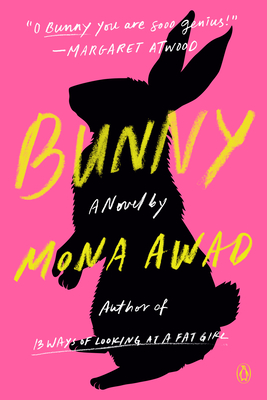
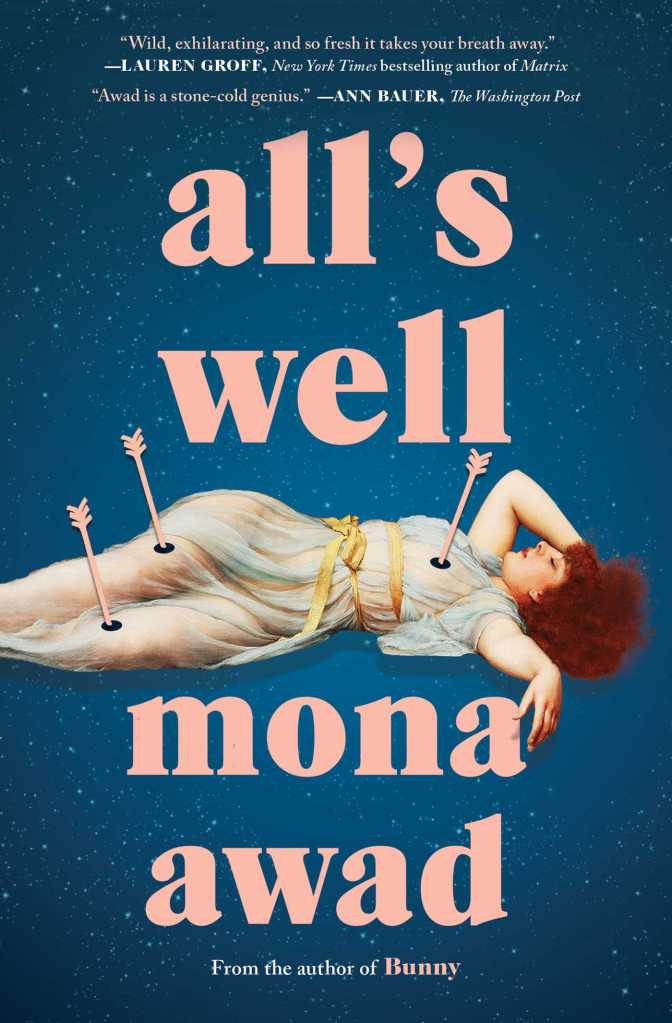


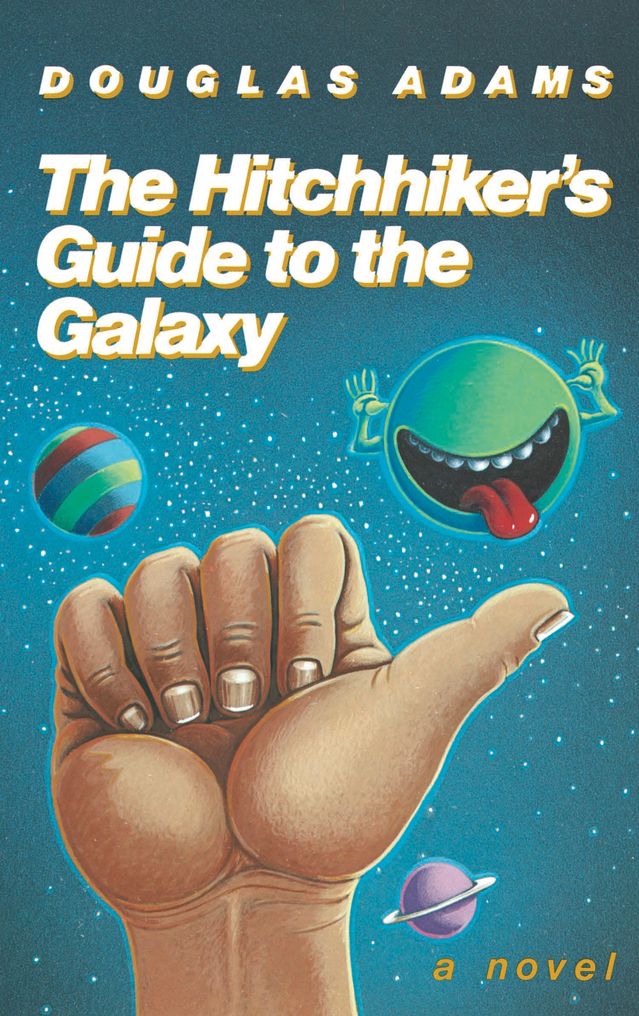

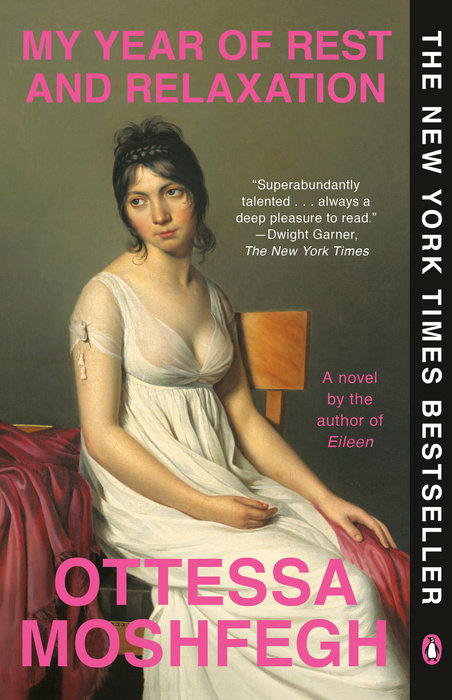
I’ve only read a few stories that comfortably fit in this odd space of the literary market. Mona Awad’s Bunny, All’s Well, and Rouge are all horror-leaning. Piranesi by Susanna Clarke is more fantastical. Douglas Adams’ The Hitchhiker’s Guide to the Galaxy is a cult classic sci-fi story. Some more literary picks are Sayaka Murata’s Convenience Store Woman (although I didn’t find it so weird) and My Year of Rest and Relaxation by Ottessa Moshfegh.
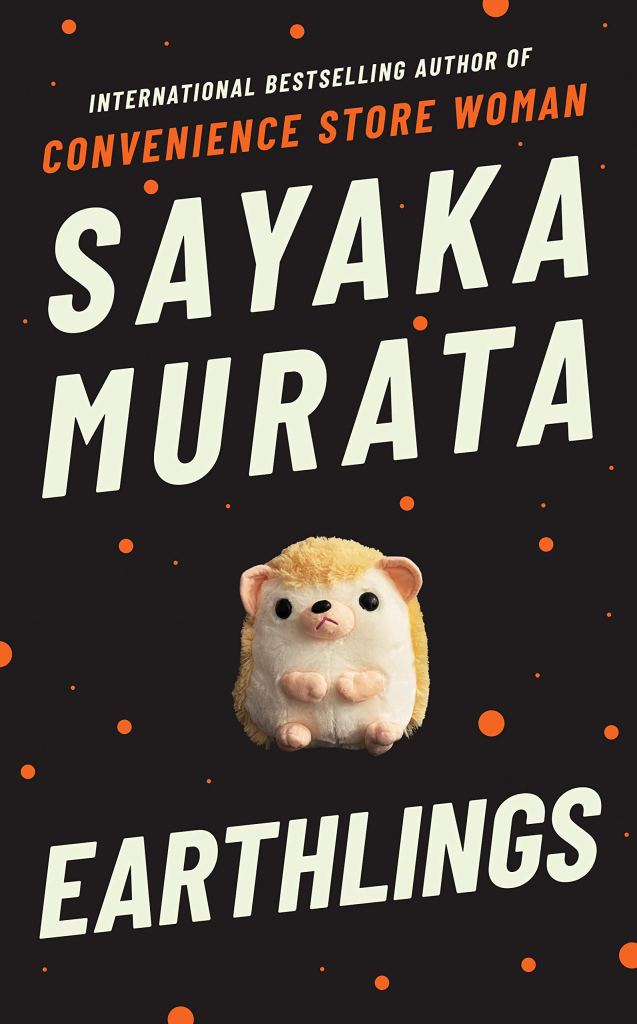
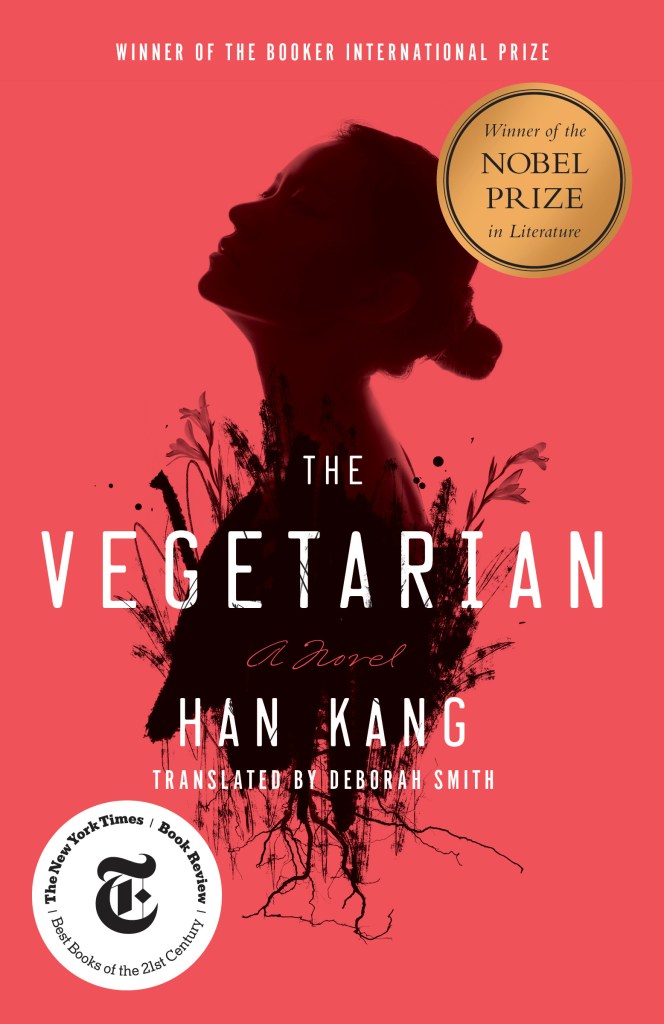
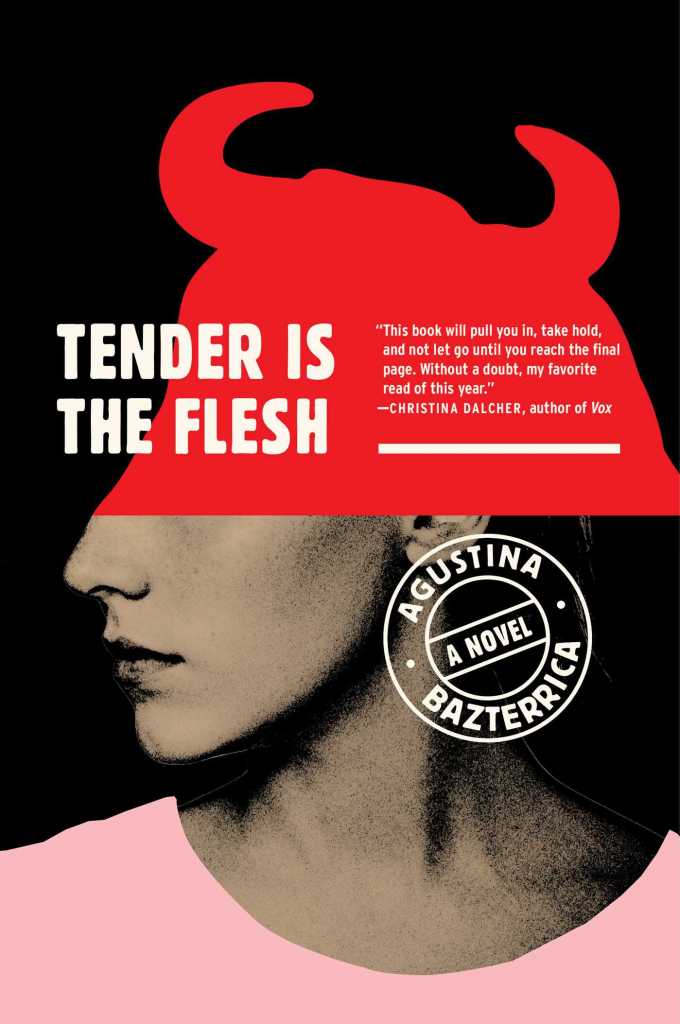


Some other popular ones I haven’t read yet are Earthlings by Sayaka Murata, The Vegetarian by Han Kang, Tender is the Flesh by Agustina Bazterrica, Annihilation by Jeff VanderMeer, and various works by Neil Gaiman and Haruki Murakami.
This wide range of stories with vastly diverse elements all get grouped together on a singular basis: they make the reader uncomfortable. Be it by startling, confusing, disgusting, or otherwise rousing, the story sets out to challenge expectations.
Art should comfort the disturbed and disturb the comfortable.
Cesar A. Cruz
Traversing Discomfort
Whether or not a reader can handle the content of these stories should not at all reflect their morality or intellect. Everyone is different and has a unique history that shapes their tastes and comfort levels. An ability to traverse discomfort shouldn’t be viewed as a superior trait. That’s not the point of this article.
The point, instead, is about the tendency to take on the challenge of “weird fiction”, go through it with little critical thinking or reflection, and boast about “achieving” it in the end. What I mean by this is reading a story that on the surface level seems incoherent or has “no plot, just vibes” and a) immediately writing it off or b) praising it for going “over your head” and leaving it at that.
“No Plot, Just Vibes”
The term “no plot, just vibes” is tossed around a lot in online book discussions. It’s generally inoffensive, playful, and sometimes a very apt descriptor for some stories. Typically, it refers to books that are more character-driven. Several of the books I’ve mentioned above get this label, particularly literary-leaning ones. Sally Rooney’s novels (Normal People; Conversations with Friends; Beautiful World, Where Are You; Intermezzo) are another example. Speculative books with strong atmospheres also sometimes get this label, like Piranesi by Susanna Clarke (mentioned above) and The Night Circus by Erin Morgenstern.
The term is not necessarily a bad thing. It can be helpful in a review to give a potential reader an idea of what they’re getting into. However, if the term is toted as a reason to not think deeply about the story’s themes, you could very well be unduly discrediting the story. Even if a book doesn’t have a strong plot, there is still likely a point there by way of themes, and it’s the reader’s privilege to excavate it if they desire.
Genre Snobbery
Historically, there has been a bias against genre fiction, particularly in academic or higher-brow conversation. Literary fiction is beheld as having more merit. This is because these stories tend to explore the concrete world as we know it and the real-world problems therein. They put great emphasis on theme, particularly in relation to societal aspects (be it political, social, etc.). It’s seen as more contemplative and insightful than superfluous stories about wizards and aliens.
Those who enjoy or favor genre fiction likely know, however, that much the same can be said for speculative stories. Fantasy stories often explore military and political intrigue, and their diverse civilizations enable discussions on prejudice and discrimination. In the Victorian era, science fiction was initially academically beheld as it explored the future world’s technological possibilities. And one of today’s most insightful genres, dystopian fiction, is a science fiction subgenre that specifically explores unjust societies.
At this point, fantasy and science fiction are very easily defended with works like The Lord of the Rings, The Earthsea Cycle, 1984, Brave New World, and so many more under their belts. A genre that literary (and cinematic) circles still unfortunately overlook, however, is horror.
(Please allow me to clarify that I’m not saying a book’s literary merit equals its worth. Stories that focus on relatability and entertainment value over themes and messages can be just as good. What I’m talking about here specifically is overlooked literary merit/thematic elements in genre fiction.)
Horror stories are designed to frighten, disgust, or build dread in the reader. In their depictions of the graphic and disturbing, I’d argue that much of horror has more literary merit than any other genre. Psychological horror highlights character nuance, cosmic/Lovecraftian horror explores nihilism and insignificance, Gothic fiction often emphasizes gender, sexuality, and power imbalances. Body horror in its many strains (cannibalism, mutilation, disease, decay, etc.) can explore a host of topics from desire to abuse to generational trauma to hubris gone wrong to beauty standards. It is visceral and perverse and can be extremely effective in sending a message.
A good deal of stories described as “weird fiction” have strong horror elements. I don’t think that’s any coincidence. While it’s easier to see potential insights in fantasy and science fiction, the grotesque in horror stories can easily overwhelm consumers. There’s nothing wrong with this! However, it’s made all the easier to write them off as shock value (which, admittedly, is all some have) because of that discomfort. Horror and weird fiction in general often both get this mistreatment.
“No Idea What Happened, 5 Stars”
One of the benefits of websites like Goodreads and Letterboxd is getting to see a wide variety of opinions and insights from a wide variety of people. You can have discussions about plots, characters, and themes you love, or hate, or are confused by. You can find people who agree with you or learn from others who don’t. These platforms foster potential for great enrichment.
As these websites are fueled by all sorts of people, there is plenty of room for all sorts of reviews. I believe light-hearted, tongue-in-cheek posts should be as welcome as the more analytical ones. A little bit of everything for everyone. With that being said, it can be discouraging if there is too much of one of these leanings, particularly if you’re looking for the other.
For example, upon finishing Brutes by Dizz Tate (a literary novel with speculative elements that could definitely be classified as “weird fiction”), I was left with a lot of conflicting feelings and questions I couldn’t find the answers to on my own. When I went to Goodreads to see other people’s thoughts, I was disheartened to find so many short, one-note reviews. There was so little being said, at least on the first page or two of reviews.

I was especially confused by people saying they didn’t understand the story, but who still proceeded to give it 4- or 5-star ratings. If you loved it, wouldn’t you have more to say? I appreciated the insightful negative reviews, but I craved more discussion overall. I hoped to see more interpretations of the novel’s confusing parts. However, all I found were either accusations of drivel or dilution of themes to bled-dry buzzwords and phrases (“no plot, just vibes”, “girlhood”, “-core”, etc.).
Let me emphasize that I maintain the fact that there’s a place for these reviews. I get a good chuckle out of them and write my own fair share. However, it did feel unbalanced for this particular book. The conversations trivialized the themes and watered them down. This felt almost alarming considering Brutes is in large part about child abuse/sexual assault. (I did find more of the discussions I was seeking in a Reddit thread, by the way!)
The Power of Language
In his writing The Genesis of the Self and Social Control, sociologist George Herbert Mead (1863-1931) states the following.
We sometimes speak as if a person could build up an entire argument in his mind, and then put it into words to convey it to someone else. Actually, our thinking always takes place by means of some sort of symbols. It is possible that one could have the meaning of “chair” in his experience without there being a symbol, but we would not be thinking about it in that case. We may sit down in a chair without thinking about what we are doing, that is, the approach to the chair is presumably already aroused in our experience, so that the meaning is there. But if one is thinking about the chair he must have some sort of a symbol for it. It may be the form of the chair, it may be the attitude that somebody else takes in sitting down, but it is more apt to be some language symbol that arouses this response. In a thought process there has to be some sort of a symbol that can refer to this meaning, that is, tend to call out this response, and also serve this purpose for other persons as well. It would not be a thought process if that were not the case.
Excerpt of “The Genesis of the Self and Social Control” by George Herbert Mead
In his sociological theory, symbolic interactionism, it’s postulated that society is based around symbols. Conversation is an interaction of symbols and, through that, one finds meaning in society and themself. Inversely, if we don’t have the “symbol” to represent something, we can’t properly attribute meaning to that thing.
Under this belief, we get into an unfortunate position when our language is made up of words misconstrued, minimized, or otherwise meaningless. In that same writing, Mead also states, “What is essential to communication is that the symbol should arouse in one’s self what it arouses in the other individual.” If we don’t have the same intentions in word choice, we talk past each other.
Media Literacy & Anti-Intellectualism
In recent times, there’s been increased discussion on “media literacy”, “anti-intellectualism”, and the general consumer’s relation to each concept. Unfortunately, like most talking points in online spaces, they’ve quickly become buzzwords and have muddied connotations as more people latch onto them with varying levels of meaningful thought.
- media literacy (n): the ability to critically analyze stories presented in the mass media and to determine their accuracy or credibility*
- anti-intellectual (n): a person who scorns intellectuals and their views and methods*
- intellect (n): the faculty of reasoning and understanding objectively, especially with regard to abstract or academic matters; the understanding or mental powers of a particular person*
*as defined by Oxford Languages
Online, “discussions” have become squabbles for spotlight. While that can be either in malice or play, both are harmful when it comes to true communication. Moths to flame, people tend to follow the loudest voice, even if it’s loud and wrong. This makes learning in a meaningful way very difficult.
Learning at all is sticky territory, too, when it’s believed that ignorance equals media illiteracy or anti-intellectualism.
- ignorance (n): lack of knowledge or information*
*as defined by Oxford Languages
But the problem shouldn’t be not knowing or not understanding. The problem should be not trying to understand.
But how are we meant to understand anything if we’re not allowed to learn without ridicule? Even more than that, how do we do have meaningful conversation with our increasingly weakened “symbols”?
Algorithms routinely repress or remove online posts with words and topics relating to suicide, sexuality, drugs, violence, and more, particularly on TikTok. This is supposedly to keep the platform a safe, positive space. “TikTok speak” or “algospeak” is the vernacular curated to avoid this censorship. However, these replacement words have escaped online circles and have infiltrated some people’s speech patterns in real life. This is harmful in multiple ways. For one, by softening our language, it robs conversations of their due gravity. For another, it trains the ear to receive the initial words as harsh or inappropriate, making it uncomfortable to encounter.
I don’t think it’s far-fetching to draw comparisons to the limiting language in George Orwell’s dystopian novel, 1984. In the novel, a character implies that “the whole aim of Newspeak is to narrow the range of thought”.
All of these factors work against us when it comes to forming meaningful thoughts and conversations. That’s why I think it’s so important to stretch these muscles. If you don’t use it, you lose it. I’d hate to see our language further reduced and learning increasingly ridiculed.
Is It Really That Serious?
It’s been a very conscious goal of mine lately to think deeply about the things I engage with. When I finish a book and don’t readily have something to say about it, I push myself to think of something to write about, even just for myself (no one else can criticize a private reading journal!). Often, I have more thoughts than I realize. If I hadn’t done that little bit of pushing, though, it would’ve easily been lost and the whole experience with that book could’ve faded away altogether.
But is not liking Mona Awad’s novel about a cult of college girls performing rituals with rabbits such a bad thing? Is that really anti-intellectualism?
No, I don’t think so. But maybe at least try to understand where it’s coming from. And, if after thinking on it, you still think it was wrapped up poorly and was pointless anyway, then that’s perfectly fair. By doing that, you can also feel all the more secure in your love or hate for it.
(Disclaimer: I use Bunny as an example because I struggled with it. I want to reread it, though, so I can give it a better chance.)
Ultimately, I don’t think it’s wrong to dislike something because it’s confusing. I don’t think it’s wrong to like something because it’s confusing. I only hope that neither of these positions are a product of an inability or aversion to articulating one self. In a world pushing more and more for conformity and censorship, I think it’s more important than ever to determine where we ourselves stand.
What do you think? Do you really need to understand something to love or hate it? What are your thoughts on confusing media? Is it okay to be confused and happy about it? Or is something bad if it can’t clearly explain itself? I’d love to hear your thoughts below!

 Little Bit of All That
I haven’t read any of these, but I have several on my TBR!
LikeLiked by 1 person